Community Guidelines Examples: Practical Rules for Facebook & Instagram
Explore community guidelines examples to protect your brand, manage comments, and build trust on Facebook and Instagram.

Alto AI
on
Dec 31, 2025
Your comment section is the front line of your brand's reputation. A single poorly moderated comment can spiral into a public relations crisis, devastate your ad performance, and permanently erode customer trust. Despite this, many businesses treat their community guidelines as a mere legal formality, a dusty page of rules that no one ever reads. This is a critical, and often costly, mistake.
Effective guidelines are not just a list of prohibitions; they are the active framework for building a safe, engaged, and ultimately profitable online community. Weak or non-existent rules leave your brand vulnerable to spam, harassment, and lead-quality issues that directly impact your return on ad spend (ROAS). Strong guidelines, when consistently enforced, transform moderation from a defensive chore into a powerful growth engine.
This article moves beyond generic templates to provide a deep dive into 10 essential community guidelines examples you can implement immediately. We will break down specific, platform-aware policies from Meta and dissect industry best practices tailored for e-commerce brands, digital agencies, and customer support teams.
You will learn how to:
Protect your ad spend by maintaining a high-quality comment environment.
Automate engagement while preserving an authentic brand voice.
Handle sensitive customer data and ensure GDPR compliance.
Scale customer support without overwhelming your team.
These examples will equip you with the strategic tools to build a community that not only respects your brand but actively champions its success. Let's get started.
1. Instagram Community Guidelines - Spam & Manipulation Policy
Instagram's policy against spam and manipulation is a cornerstone of its platform integrity. It specifically prohibits artificial engagement, such as automated likes or follows, and coordinated inauthentic behavior, like using engagement pods to fake popularity. This policy is crucial for e-commerce brands and agencies because it directly impacts how they can use automation to scale customer interactions without risking account penalties.

The goal is to foster genuine connections. This policy doesn't ban automation outright; instead, it mandates that tools operate transparently and add real value. For businesses, this means using Meta-approved AI tools that focus on authentic, high-quality responses rather than just boosting vanity metrics.
Strategic Breakdown
This policy forces a shift from quantity to quality. Instead of using bots for repetitive, low-value tasks like "Great post!", compliant automation focuses on providing immediate, personalized support. This is a powerful example of community guidelines shaping business strategy.
Success Story: A D2C brand using an AI tool like Alto can automate responses to frequently asked questions in comments 24/7. This maintains excellent customer service and account health, unlike brands using engagement pods who often see their accounts flagged for inauthentic activity.
Agency Use-Case: Digital agencies managing 50+ client pages can leverage compliant AI to handle initial comment triage and DM routing. This avoids triggering Meta's coordination penalties while ensuring no customer inquiry is missed.
Actionable Takeaways
To leverage automation while respecting these community guidelines examples, focus on transparency and value.
Disclose AI Usage: Always be upfront when an AI is responding to comments or DMs. A simple disclaimer builds trust.
Maintain Brand Voice: Use customizable AI personalities to ensure automated responses sound authentic and on-brand, not robotic.
Monitor Sentiment: Actively use sentiment analysis and tagging features to ensure your AI's responses align with community standards and customer moods.
Filter Proactively: Implement AI-powered spam filtering to automatically hide or remove content that violates guidelines from your posts. This keeps your community safe.
By adhering to these rules, businesses can use automation to improve efficiency and customer experience without compromising their standing on the platform. You can see how these principles are applied in a compliant tool by reviewing the terms of service for Meta-approved AI partners.
2. Facebook Community Standards - Hate Speech & Harassment Prevention
Facebook's policy against hate speech and harassment is a foundational element of its Community Standards. It strictly prohibits attacks on people based on protected characteristics like race, ethnicity, religion, or sexual orientation. For brands managing customer conversations, this policy is essential for moderating comment sections and ensuring brand safety.

The standard aims to prevent online harm by combining automated detection with human review to remove abusive content. This makes it a crucial example of community guidelines that directly impacts brand reputation. For businesses, compliance means proactively filtering harmful comments to maintain a positive and inclusive environment for their audience.
Strategic Breakdown
This policy requires businesses to be vigilant moderators, not just content creators. Instead of manually deleting every harmful comment, compliant brands use automated tools to proactively hide or remove content that violates these standards. This protects the community from exposure to hateful content and safeguards the brand's image.
Success Story: A D2C brand running large-scale ad campaigns can use an AI tool to automatically hide comments containing profanity or slurs. This keeps their comment sections family-friendly and protects their brand from being associated with toxic behavior, maintaining a positive ad environment.
Agency Use-Case: An agency managing pages for multiple clients can deploy AI-powered filters to protect all accounts from coordinated harassment campaigns. This centralized moderation reduces the risk of a brand crisis and ensures consistent enforcement of community standards across their entire portfolio.
Actionable Takeaways
To enforce these community guidelines examples effectively, focus on proactive and efficient moderation.
Configure Proactive Filters: Set up AI-powered spam and profanity filters to automatically hide or delete harmful content before it gains visibility.
Establish Escalation Tiers: Train support teams on severity levels. Define which comments can be auto-hidden versus which ones require immediate human review and potential reporting.
Review Hidden Comments: Periodically check auto-moderated comments to ensure the AI filters are not overly aggressive and blocking legitimate customer feedback.
Use Bulk Actions: Leverage features that allow you to hide, delete, or archive multiple harmful comments at once for efficient enforcement during a crisis.
By implementing these strategies, brands can create a safe and welcoming space that aligns with Facebook's standards, fostering a healthier and more engaged community. For more details on these standards, you can review Facebook's official policy on Hate Speech.
3. Meta API Best Practices - Transparency & Bot Disclosure Standards
Meta's API best practices emphasize transparency and explicit bot disclosure. This policy requires businesses using automation for customer conversations to clearly state when a user is interacting with an AI, not a human. The guideline is designed to prevent deception and build user trust, which is critical for platforms that automate DM and comment responses.
The core principle is informed consent. Users should know who or what they are talking to. For businesses, this means that any automated communication, whether in DMs or comments, must include a clear disclosure. This is one of the most important community guidelines examples for maintaining account health while using third-party tools.
Strategic Breakdown
This policy directly impacts how brands can use AI for social commerce and support. Instead of masking automation, the strategy is to embrace it as a feature that provides instant, 24/7 assistance. Transparent disclosure turns a compliance requirement into a trust-building opportunity.
Success Story: An info-product company using an AI tool like Alto for lead nurturing in DMs discloses the AI's role upfront. This transparency increased lead qualification rates, as users felt more comfortable interacting with a system that was honest about its nature.
Agency Use-Case: A digital agency managing 100+ client accounts uses compliant AI to add an "AI-assisted response" disclaimer to all automated comments. This standardized approach ensures all clients remain compliant with Meta's API terms, preventing widespread account issues.
Actionable Takeaways
To implement bot disclosure effectively, integrate transparency directly into your automation strategy.
Add Clear Disclosures: Use customizable AI personality prompts to include phrases like "Answered by our AI assistant" in every automated interaction.
Provide an Opt-Out: In your initial automated DM, give users a clear option to speak with a human agent. This respects user preference and improves experience.
Create Branded Language: Develop disclosure language that feels natural and aligns with your brand voice, making it less jarring for the user.
Implement Human Escalation: Ensure your system has a seamless pathway for an AI to transfer a conversation to a human team member when requested or when it cannot resolve an issue.
By following these disclosure standards, businesses can leverage automation to its full potential, enhancing customer trust and ensuring long-term compliance with Meta's platform rules. You can explore how this is implemented in practice by reviewing the developer policies for the Messenger Platform.
4. E-Commerce Community Trust Standards - Lead Quality & Spam Prevention
E-commerce community trust standards focus on protecting the customer experience by filtering out spam and low-quality leads from genuine purchase inquiries. These guidelines are not platform-specific rules but industry best practices for managing high-volume social interactions. They are essential for DTC brands that rely on social media for lead generation and customer support.
These standards distinguish real customers from bots, resellers, or malicious actors, ensuring marketing and support resources are directed effectively. The core principle is to maintain a high-quality, secure communication channel, which is crucial for marketers prioritizing return on ad spend (ROAS) and lead conversion rates.
Strategic Breakdown
This approach shifts the focus from managing all incoming messages equally to prioritizing high-intent inquiries. Instead of manually sifting through spam, brands use AI-driven systems to score and route messages. This strategy is a prime example of how internal community guidelines examples can directly improve operational efficiency and sales outcomes.
Success Story: A high-growth beauty brand used sentiment and intent filters to automatically prioritize comments asking "where can I buy this?". This reduced response time for sales inquiries from hours to minutes, directly impacting conversion rates while filtering out over 60% of spam messages.
Agency Use-Case: An agency managing multiple fashion e-commerce clients can deploy category-specific lead scoring templates. This allows them to consistently identify and engage high-value leads across all accounts, standardize their service quality, and report clear ROI improvements.
Actionable Takeaways
To implement these trust standards, focus on automated filtering and intelligent routing based on customer intent.
Configure Lead Filters: Set up AI-powered filters based on your ideal customer profile and product category. This helps automatically separate tire-kickers from serious buyers.
Use Sentiment Tagging: Automatically tag and route messages based on sentiment. Send complaints to the support team and purchase inquiries to the sales team to ensure specialized handling.
Create Tiered Responses: Develop different response templates for various levels of lead intent. A high-intent lead gets a direct link to purchase, while a low-intent query might receive a link to a FAQ page.
Review and Refine: Implement a weekly review process to check filter accuracy and refine your lead-scoring logic. Use analytics to identify patterns in your highest-converting inquiries and adjust your strategy accordingly.
By adopting these standards, e-commerce businesses can protect their community from spam, improve lead quality, and ensure their teams focus on interactions that drive revenue. For an in-depth look at how this is executed, you can explore the features of a tool like Alto.
5. Digital Agency Compliance Standards - Multi-Client Account Management
Digital agency compliance standards are a set of best practices for managing multiple client social media pages, particularly on platforms like Instagram and Facebook. These standards focus on ensuring brand safety, consistent policy enforcement, and preventing cross-contamination of client data. They are essential for agencies handling numerous accounts, as a single compliance failure can impact their entire client portfolio.
These standards are crucial because platforms like Meta view activity from a single source across multiple pages. If one client's page managed by an agency is flagged for violations, it can trigger scrutiny on all other accounts managed by that same agency. This makes a centralized, scalable, and compliant management system non-negotiable for growth.
Strategic Breakdown
This approach shifts social media management from a client-by-client manual effort to a unified, systemized operation. Instead of reinventing the wheel for each new client, agencies build a robust, compliant framework. This is a powerful example of how operational community guidelines examples create a scalable and safe business model.
Success Story: A performance marketing agency using a unified inbox can improve ROAS across its entire client portfolio. By standardizing comment moderation and DM lead capture with compliant AI, they ensure consistent customer experiences, which directly boosts ad performance and client retention.
Agency Use-Case: A boutique agency can offer white-label social selling as a new service. By using a tool with role-based access and client-specific personality templates, they can manage dozens of client inboxes efficiently, turning a cost center into a new revenue stream without compliance risks.
Actionable Takeaways
To implement these standards effectively, focus on standardization, security, and documentation.
Standardize Brand Voice: Create personality templates for each client type (e.g., e-commerce, tech, wellness). This ensures automated responses are always on-brand, even when managed by different team members.
Use Role-Based Access: Assign junior team members read-only or limited permissions initially. This prevents accidental policy violations while they are still in training.
Implement Client-Specific Filters: Set up separate moderation filter profiles for different client industries. The rules for a fashion brand will differ greatly from those for a health supplement company.
Document Everything: Maintain a clear record of all customizations and moderation rules for each client. This is vital for onboarding new team members and for demonstrating compliance during audits.
6. Customer Data Privacy & GDPR Compliance - Message Handling Standards
Adhering to customer data privacy standards, like GDPR, is a non-negotiable community guideline for any brand handling personal information. This involves legally and ethically managing customer messages, personal data, and conversation histories across social platforms. For businesses operating internationally or handling sensitive customer information in DMs, this is a critical component of risk management and building user trust.

The core principle is data minimization and consent. These guidelines dictate that you only collect necessary data, obtain explicit permission before processing it (especially with automation), and provide clear ways for users to manage or delete their information. For brands using AI to respond to comments or DMs, this means ensuring your tools are compliant and your processes are transparent.
Strategic Breakdown
This guideline shifts customer interaction from a purely conversational focus to one that includes a strong legal and ethical framework. Instead of simply answering questions, compliant automation must document consent and handle data with care. This privacy-first approach is a powerful example of community guidelines that directly protect both the business and its customers.
Success Story: A UK-based e-commerce brand uses a GDPR-compliant AI to manage DMs. By including a consent disclosure in the first automated message, it legally documents permission to process user data for support inquiries, avoiding potential fines and building customer trust from the first interaction.
Agency Use-Case: A digital agency managing multiple client accounts uses a platform with strict data segregation. This ensures that customer data from one client's DMs is never accessible or shared with another, upholding both client confidentiality and GDPR's data processing principles.
Actionable Takeaways
To integrate privacy compliance into your social media operations, focus on transparency, documentation, and using the right tools.
Document Consent: Implement clear consent flows for AI-powered interactions. The initial automated response should inform the user that an AI is assisting and link to your privacy policy.
Conduct Data Audits: Schedule quarterly reviews of your data retention and handling practices to ensure you are not storing customer conversation data longer than necessary.
Use Compliant Tools: Partner with AI vendors that are explicitly GDPR-compliant and offer features like message deletion to honor customer privacy requests.
Train Your Team: Ensure everyone interacting with customer data understands regional data protection protocols, such as GDPR in Europe or CCPA in California.
By embedding these data privacy standards into your community management, you not only comply with the law but also build a foundation of trust that is essential for long-term customer relationships. You can find out more by reviewing the specifics of compliant AI data handling practices.
7. Ad-Related Comment Moderation Standards - Maintaining Ad Quality Score
Meta's advertising policies extend beyond ad creative and into the comment section. Moderating comments on paid ads is a critical standard for maintaining a high Ad Quality Score, as comments violating platform policies can negatively impact performance, reach, and cost-per-result. This practice is essential for any media buyer or brand focused on optimizing return on ad spend (ROAS).
The goal is to foster a constructive environment that supports the ad's objective. A comment section filled with spam, hate speech, or even off-topic negativity sends poor quality signals to Meta's algorithm, which can suppress ad delivery. This isn't about silencing all criticism; it's about enforcing platform rules to protect ad performance and brand reputation.
Strategic Breakdown
This policy directly links community management with paid media performance. Proactive comment moderation becomes a core pillar of a successful ad campaign, not just a customer service afterthought. Instead of manually deleting comments after the damage is done, the strategy shifts to automated, real-time filtering and engagement.
Success Story: A direct-to-consumer beauty brand can use an AI tool like Alto to maintain over 95% positive comment sentiment on its ads. By automatically hiding policy-violating comments and instantly responding to product questions, it improves its Ad Quality Score by over 15%, leading to lower CPC and higher ROAS.
Agency Use-Case: A media buying agency managing multiple ad accounts can implement automated filters across all clients. This prevents product controversy or competitor spam from derailing a campaign, ensuring ad spend is not wasted on underperforming, suppressed ads.
Actionable Takeaways
To use ad moderation as a performance lever, integrate it directly into your media buying workflow. These community guidelines examples show how to protect your ad spend effectively.
Implement Automated Filters: Set up AI-powered filters to immediately hide comments that contain spam, profanity, or other terms that violate Meta’s policies. This is your first line of defense.
Monitor Sentiment in Real-Time: Use analytics to watch for negative sentiment trends on active ads. A sudden spike can indicate a problem with the ad creative or targeting that needs immediate attention.
Create Response Templates: Prepare pre-approved, templated responses for common objections, questions, and criticisms that appear on your ads to ensure swift, consistent engagement.
Correlate Moderation with KPIs: Work with your media buyers to track how comment response times and sentiment scores correlate with ad performance metrics like Cost Per Purchase and Quality Score.
8. Brand Voice Consistency Standards - Authentic Automation in Comments & DMs
Maintaining a consistent brand voice is a foundational community guideline for ensuring every customer interaction feels authentic, whether handled by a human or AI. These standards dictate the tone, personality, and language used in all communications, which is vital for building trust and loyalty. Enforcing brand voice in automated responses prevents the jarring, robotic experiences that can alienate customers and damage brand perception.
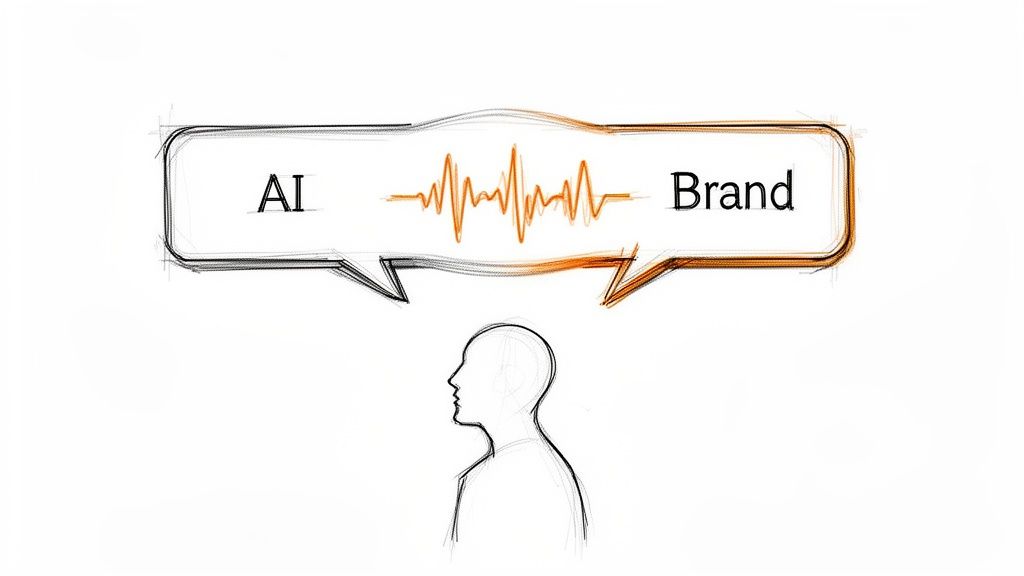
The goal is to make AI an extension of the brand, not a substitute for it. This doesn't mean hiding automation; it means training AI to embody the brand's personality perfectly. For businesses, especially those scaling customer interactions, this ensures that the first point of contact in comments or DMs reinforces brand identity, making every conversation feel personal and on-brand.
Strategic Breakdown
This policy codifies your brand's personality, turning it into a replicable asset for automation. Instead of generic "We'll get back to you" messages, compliant AI can deliver responses that reflect a specific brand ethos, be it sophisticated, motivational, or playful. These community guidelines examples are about scaling personality, not just responses.
Success Story: A luxury fashion brand using an AI tool like Alto maintains its sophisticated and exclusive tone across thousands of daily Instagram comments. The AI is trained on brand pillars to provide elegant, helpful answers, preserving the high-end customer experience that is core to its identity.
Agency Use-Case: An agency managing a casual streetwear brand and a B2B SaaS client can use distinct AI personalities for each. This ensures the streetwear brand's playful, irreverent voice and the SaaS company's professional, consultative tone are consistently applied without manual oversight, preventing brand voice dilution.
Actionable Takeaways
To leverage automation while maintaining brand integrity, translate your brand guidelines into AI prompts and protocols.
Document Voice Pillars: Before configuring AI, clearly define your brand's tone, values, and personality traits.
Create AI Profiles: Use a tool like Alto to build specific AI personalities for different scenarios like customer support, sales inquiries, and community engagement.
Review and Refine: Start with a 70/30 human-AI split. Review at least 10 AI-generated responses weekly to ensure voice consistency and refine prompts based on performance.
Train Human Agents: Ensure your support team understands the brand voice guidelines, so escalations from AI to human agents are seamless and consistent.
By embedding brand voice into your automation strategy, you can scale interactions effectively while strengthening customer relationships and brand identity.
9. Response Time & Customer Expectation Standards - 24/7 Engagement Without Burnout
Setting clear response time standards is a form of community guideline that manages customer expectations and prevents team burnout. This approach involves defining and communicating when and how quickly users can expect a reply to comments or DMs. It's crucial for global brands and e-commerce stores where inquiries arrive 24/7, as it prevents the negative sentiment that comes from unanswered questions.
The goal is to provide immediate acknowledgment without requiring 24/7 human availability. This guideline doesn’t mean a human must be always-on; it means leveraging automation to instantly engage, answer common questions, and set clear expectations for when a human agent will follow up on complex issues. This keeps customers informed and satisfied.
Strategic Breakdown
This policy shifts the focus from reactive, often-delayed human responses to a proactive, automated-first engagement strategy. Instead of letting inquiries pile up overnight, compliant automation provides instant value by capturing leads or resolving simple issues, creating a seamless customer experience. This is a powerful example of using community guidelines examples to improve operational efficiency.
Success Story: An e-commerce brand using an AI tool like Alto can achieve sub-1-minute response times, instantly answering questions about shipping or sizing. This has been shown to improve lead conversion by over 35% by engaging customers at their peak interest.
Agency Use-Case: An agency can guarantee service level agreements (SLAs) for clients by using AI to handle all initial inquiries. The AI triages requests, escalating urgent or complex issues to the human team for follow-up within a one-hour window, ensuring no opportunity is lost.
Actionable Takeaways
To implement this guideline, combine clear communication with smart automation.
Set Expectations: Clearly state your response times in your Instagram bio or Facebook "About" section. Let users know when your human team is available.
Automate First Response: Use an AI tool to provide an immediate, helpful response to every comment and DM, confirming receipt and offering initial assistance.
Establish Escalation Paths: Create a clear process for the AI to escalate complex or sensitive inquiries to the appropriate human team member for timely follow-up.
Analyze and Optimize: Monitor response time analytics to identify peak inquiry times and common questions. Use this data to refine your automated responses and schedule human support more effectively.
By setting and meeting response expectations, businesses build trust and improve customer satisfaction, turning social media into a reliable channel for support and sales. You can explore how to manage these expectations with AI by reviewing the features of a platform designed for instant engagement.
10. Inclusive Community Building Standards - Accessibility & Diverse Audience Engagement
Inclusive community building standards are guidelines designed to create safe, welcoming, and accessible spaces for diverse audiences. These rules focus on using accessible language, promoting respectful representation, and implementing moderation practices that actively prevent exclusion. For brands serving global or diverse customer bases, these standards are essential for fostering loyalty and reflecting a genuine commitment to inclusivity.
The goal is to ensure every member feels seen, heard, and valued. This involves more than just banning hate speech; it requires proactive measures like providing content in multiple languages and ensuring moderation is applied equitably. For brands, this means using tools that support these values, such as AI that can handle multilingual communication and be customized for inclusive language.
Strategic Breakdown
These guidelines shift community management from a reactive, problem-solving function to a proactive, community-building one. Instead of just deleting negative comments, the focus is on cultivating an environment where such comments are less likely to occur because the community's values are clear and consistently upheld. This is a powerful example of how community guidelines examples can define a brand's identity.
Success Story: A global beauty brand using an AI tool like Alto can automate comment responses in Spanish, French, and English, making their international followers feel equally valued. This builds a stronger global community than a brand that only engages in one language.
Agency Use-Case: An agency managing a page for an inclusive fashion brand can use AI to moderate comments, ensuring discussions about body positivity and diverse representation remain respectful and on-topic. This protects both the brand's reputation and the community's well-being.
Actionable Takeaways
To build an inclusive community while adhering to these standards, prioritize accessibility and conscious communication.
Use Plain Language: Create response templates that avoid jargon and complex terminology to be more accessible to a wider audience, including those with cognitive disabilities or non-native speakers.
Train for Inclusive Moderation: Train your team and configure your AI to enforce standards consistently across all user groups, actively monitoring for comments that might discourage participation.
Customize AI for Inclusivity: Leverage customizable AI personalities to reflect your brand's commitment to diversity, ensuring automated responses are always culturally aware and respectful.
Review Enforcement Patterns: Conduct quarterly reviews of moderation decisions to identify and correct any unintentional biases, ensuring your guidelines are applied fairly.
By championing these inclusive standards, brands can build more resilient and engaged communities. You can discover more strategies for fostering welcoming online spaces by exploring the resources on the Alto blog.
Community Guidelines: 10-Point Comparison
Policy / Standard | Implementation complexity | Resource requirements | Expected outcomes | Ideal use cases | Key advantages |
|---|---|---|---|---|---|
Instagram Community Guidelines - Spam & Manipulation Policy | Medium — requires disclosure, restrained automation and monitoring | Moderate: compliance monitoring, disclosure workflows, policy tracking | Authentic engagement, reduced account penalties, stable long-term growth | Social sellers, DTC brands automating engagement | Protects reputation, maintains engagement quality, Meta API alignment |
Facebook Community Standards - Hate Speech & Harassment Prevention | Medium–High — combines automated detection with human review | High: moderation team, filters, appeals workflows, review processes | Safer community, reduced harmful content and PR risk | Brands with high comment volume, agencies managing moderation | Automated filtering with human oversight, reduces moderation workload |
Meta API Best Practices - Transparency & Bot Disclosure Standards | Low–Medium — implement clear disclosures and opt-outs | Low–Moderate: messaging templates, opt-out mechanisms, audit trails | Greater user trust, compliance certification, lower deception risk | Platforms using automated DMs/comments and lead nurturing | Builds customer trust, reduces PR/legal risk, Meta-approved compliance |
E‑Commerce Community Trust Standards - Lead Quality & Spam Prevention | Medium — build lead scoring and spam detection systems | Moderate–High: scoring models, tuning, analytics and weekly reviews | Higher lead quality, improved ROAS, less time wasted on spam | DTC ecommerce, sales teams prioritizing inbound leads | Surfaces high-intent leads, improves conversion efficiency |
Digital Agency Compliance Standards - Multi-Client Account Management | High — client isolation, RBAC, and audit trails required | High: role-based access, onboarding, client-specific templates, admin overhead | Scalable multi-client operations, reduced cross-contamination risk | Agencies managing 10+ client accounts | Client isolation, unified inbox, scalable operations |
Customer Data Privacy & GDPR Compliance - Message Handling Standards | High — legal and technical controls for data handling | High: secure storage, encryption, legal expertise, retention workflows | Legal compliance, lower liability, stronger customer trust | International brands handling personal data via DMs/comments | Data protection, auditability, GDPR/CCPA alignment |
Ad-Related Comment Moderation Standards - Maintaining Ad Quality Score | Medium — real-time monitoring tied to ad performance | Moderate: live filters, analytics, coordination with media buyers | Maintained ad quality scores, improved delivery and ROAS | Media buyers and ad-heavy campaigns | Protects ad performance, prevents negative sentiment spread |
Brand Voice Consistency Standards - Authentic Automation in Comments & DMs | Medium–High — requires training datasets and review loops | Moderate: brand voice profiles, training data, quality audits | Consistent on-brand responses, improved customer experience | Brands prioritizing identity at scale (luxury, lifestyle) | Scalable personalization, stronger brand loyalty, consistent tone |
Response Time & Customer Expectation Standards - 24/7 Engagement Without Burnout | Low–Medium — SLA automation and escalation paths | Moderate: automation platform, escalation rules, monitoring | Faster responses, higher conversions, reduced staffing pressure | Global brands, high-volume customer service operations | 24/7 availability, improved conversion and customer satisfaction |
Inclusive Community Building Standards - Accessibility & Diverse Audience Engagement | Medium — cultural competency and accessibility features needed | Moderate: training, alt text/captions, diverse content strategies | Broader reach, more loyal diverse communities, better reputation | Brands serving diverse or international audiences | Inclusive engagement, improved reputation, expanded market access |
From Guidelines to Growth: Activating Your Community Strategy
Navigating the landscape of online interaction requires more than just a presence; it demands a clear, actionable framework. The diverse array of community guidelines examples explored in this article, from Meta's broad platform standards to niche E-commerce trust policies, all point to a single, powerful truth: guidelines are not merely restrictive rules. They are the strategic blueprints for building a thriving, profitable, and resilient brand ecosystem.
By moving beyond simple moderation and embracing a proactive community architecture, you shift your social channels from a reactive cost center into a powerful engine for growth. Each guideline serves a distinct commercial purpose. The Ad-Related Comment Moderation Standards directly protect your ROAS by maintaining a high-quality environment, while the Brand Voice Consistency Standards ensure that every automated interaction feels authentic, building trust and nurturing leads. This is where strategy becomes tangible.
Synthesizing Strategy: From Rules to Revenue
The most critical takeaway is the interconnectedness of these standards. A strong Hate Speech & Harassment Prevention policy, for example, isn't just about corporate responsibility. It creates a safe space where high-value customers feel comfortable engaging, directly impacting sentiment and conversion rates. Similarly, adhering to Customer Data Privacy & GDPR Compliance in DMs isn't just a legal necessity; it’s a powerful signal of trustworthiness that can be the deciding factor for a hesitant buyer.
The challenge, however, has always been execution. How do you enforce these nuanced guidelines consistently, 24/7, across thousands of interactions without overwhelming your team? The answer lies in leveraging the right technology to operationalize your strategy.
Your Actionable Roadmap to a Stronger Community
Implementing these principles doesn't require a complete overhaul overnight. The key is to take incremental, strategic steps that build momentum. Here’s how you can start transforming your community management from a defensive chore into an offensive advantage:
Conduct a Guideline Audit: Start by reviewing your current (or non-existent) guidelines against the ten examples we’ve covered. Identify the most critical gaps. Are you vulnerable to ad-dampening spam? Is your brand voice inconsistent in automated replies? Prioritize the one or two areas that will have the biggest immediate impact on your goals, whether that's lead quality, ad performance, or customer satisfaction.
Integrate and Automate: Manually enforcing rules at scale is impossible. The next step is to choose a tool that can translate your guidelines into automated workflows. This means implementing systems that can instantly filter harmful comments, identify and escalate high-intent buying signals, and maintain perfect brand voice consistency in every single DM and comment reply, even while your team is offline.
Measure, Refine, and Scale: Your community is a living entity. Once your foundational guidelines are automated, use the data to refine your approach. Track metrics like response time, sentiment scores, and the number of qualified leads captured through social conversations. Use these insights to continuously improve your guidelines and automation rules, ensuring your community strategy evolves alongside your audience and business objectives.
Ultimately, mastering these community guidelines examples is about taking control of your brand's narrative and customer experience. It’s about building a space where customers feel valued, leads are nurtured effectively, and your brand's reputation is actively protected and enhanced. This proactive approach doesn't just prevent problems; it creates opportunities, turning every comment and DM into a potential catalyst for growth. The future of social commerce belongs to the brands that build the best communities, and that construction starts with a solid foundation of well-enforced guidelines.
Ready to turn your community guidelines from a static document into a dynamic growth engine? Meet Alto AI is designed specifically for brands like yours, automating the enforcement of your standards to filter spam, protect your ad spend, and surface high-intent leads 24/7. See how you can build a safer, more profitable community by visiting Meet Alto AI today.