The Ultimate Guide to Ecommerce Customer Experience (CX)
Transform your ecommerce customer experience with proven strategies. This guide covers the entire journey, key metrics, and tools to boost loyalty and sales.

Alto AI
on
Feb 20, 2026

The Ultimate Guide to Ecommerce Customer Experience (CX)
In today's crowded online marketplace, your product is no longer the main event. The real differentiator—the force that builds an iconic brand—is the ecommerce customer experience (CX). It's the sum of every interaction and feeling a shopper has with your business, from the first Instagram ad they see to the support chat they have six months post-purchase. Getting this right isn't just a goal; it's the only way to win.
Why Your Ecommerce Customer Experience Is Your Biggest Asset
Let's be blunt: a great product is just the price of entry. The battle for customer loyalty and repeat business is won or lost on the experience you provide. A superior CX isn't a "nice-to-have" feature; it's the engine that drives repeat purchases, glowing reviews, and powerful word-of-mouth marketing.
This isn't a fleeting trend—it's a fundamental shift in consumer expectations. Modern shoppers demand effortless, instant, and personalized engagement at every turn. Truly mastering ecommerce and customer service is the key to transforming your store from just another option into a beloved brand.
The New Standard is Instant
We live in a world of instant gratification, and customers expect brands to operate at the same speed. The old 24-48 hour response window for customer inquiries is a relic of the past.
A staggering 72% of customers now demand instant responses to their questions. This isn't a preference; it's the new baseline for selling online. If you can't meet this need, you're already behind.
This expectation dictates where and how you engage. Research shows that 64% of customers will spend more with a business that resolves their issues in the channel where they first reached out—like an Instagram DM or a Facebook comment. Forcing them to switch from social media to an email form creates friction, and that friction is a notorious sale-killer.
In fact, customers are 2.4 times more likely to stick with a brand when their problems are solved quickly. Speed isn’t just a feature; it’s a powerful competitive advantage.
Moving From a Single Transaction to a Lasting Relationship
A truly positive customer experience achieves something remarkable: it converts a one-time transaction into a long-term relationship. It's what separates a one-time buyer from a lifelong advocate who eagerly tells their friends about your brand.
Achieving this comes down to a few core principles:
Proactive Communication: Don't wait for the customer to ask. Anticipate their needs with timely shipping updates, helpful content, and check-ins.
Seamless Support: Provide fast, empathetic solutions without making people navigate a maze of contact forms and phone trees.
Personalized Interactions: Show shoppers you see them as individuals with tailored recommendations, relevant offers, and recognition of their loyalty.
Ultimately, investing in your CX is a direct investment in sustainable growth. It reduces customer churn, increases lifetime value, and builds a protective moat around your business that competitors can't easily replicate. To learn more about these core principles, explore our guide on best practices for customer service.
Mapping The Modern Ecommerce Customer Journey
The old, linear sales funnel is dead. Today’s ecommerce customer experience is a chaotic, multi-channel journey where shoppers bounce between discovery, research, and interaction across various platforms before ever thinking about making a purchase.
Your first job is to understand this winding path. Only then can you begin to optimize it.
A typical journey might start with a customer seeing your product in an Instagram Reel, jumping into the comments to ask a question, browsing your website on their laptop later, and finally completing the purchase on their phone that night. Each of these moments is a critical touchpoint shaping their perception of your brand.
This flow breaks down the entire process, from that initial spark of interest to turning a customer into a loyal fan.
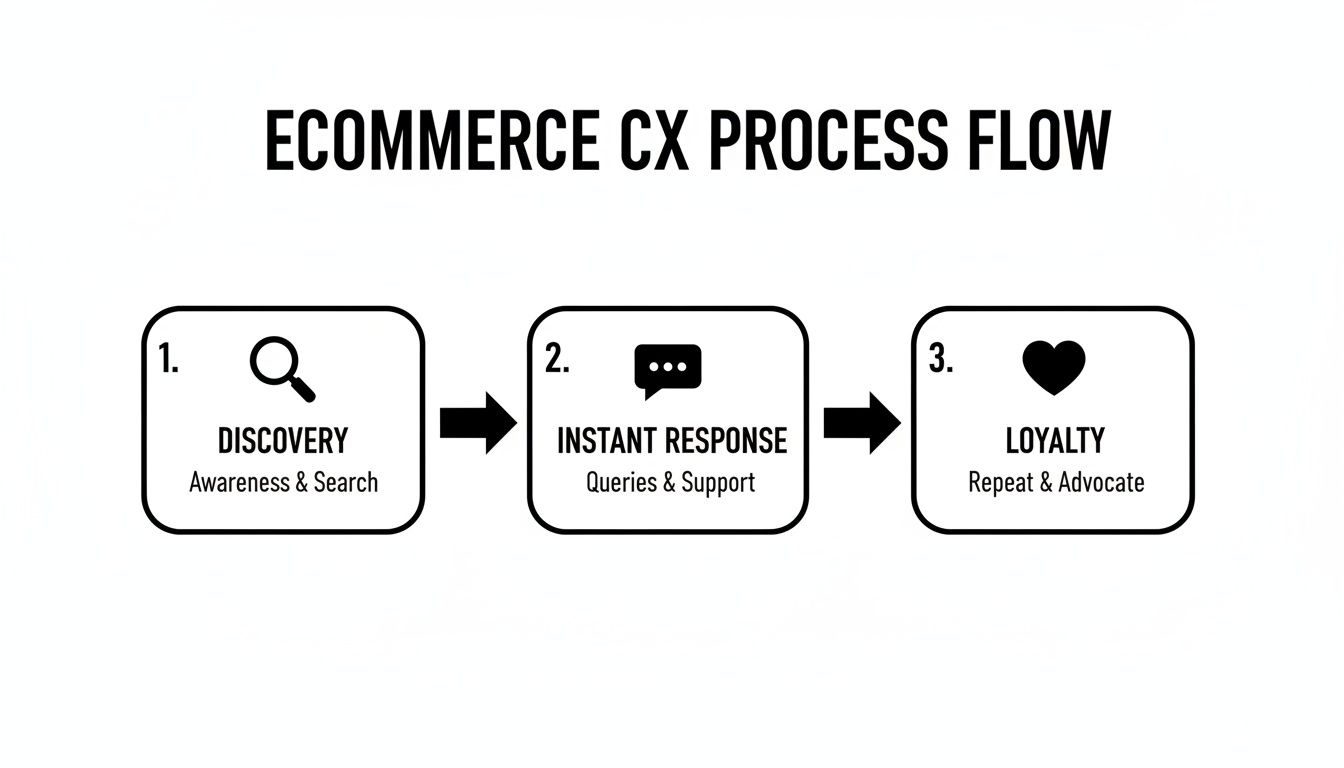
As you can see, an instant, helpful response is the critical bridge connecting initial discovery to long-term loyalty.
The Pre-Purchase Phase: Discovery and Trust-Building
This is where the relationship begins, long before an item is added to a cart. It’s all about creating awareness and, more importantly, establishing trust. The key touchpoints in this phase have largely moved off your website and onto social media.
A customer's pre-purchase journey now lives on platforms like Instagram and TikTok, where they might:
Discover your product through a paid ad or a user-generated video.
Read the comments on your posts to see what real people are saying. This is the new, unfiltered form of social proof.
Send a quick DM asking about sizing, materials, or shipping policies. Their experience here is a direct reflection of your brand's attentiveness.
How you manage these public comments and private DMs is crucial. A fast, helpful reply builds immediate confidence. A slow or ignored message sends a warm lead directly to your competitor.
The Purchase Phase: A Frictionless Website Experience
Once a shopper lands on your website, the focus shifts to creating a smooth, frictionless path to checkout. Your sole objective is to make it incredibly easy for them to find what they want and complete their purchase. Every extra click introduces a risk of abandonment.
Key moments in this phase include:
Website Navigation: Is your site easy to use on a mobile device? Can customers find product information and reviews without frustration? Almost 80% of online shoppers will abandon a purchase due to poor site navigation or unclear product details.
Checkout Process: A complicated checkout is a conversion killer. Asking for too much information or surprising customers with high shipping costs are the fastest ways to lose a sale.
Live Chat and Support: Offering on-site support can resolve last-minute questions that might otherwise prevent a purchase.
This stage is a direct test of your site’s design and clarity. A seamless process reinforces the trust you built during the pre-purchase phase.
Key Takeaway: The transition from social media to your website must be seamless. If a customer clicks a link in your bio, they should land on a page that directly corresponds to the post they were just viewing.
The Post-Purchase Phase: Nurturing Loyalty
The order confirmation email is not the finish line; it’s the starting line for retention. The post-purchase experience is where you transform a one-time buyer into a repeat customer and, ideally, a brand advocate. This phase is all about proactive communication and delivering on your promises.
Here are the critical touchpoints:
Order Confirmation: An immediate confirmation email or SMS provides instant peace of mind.
Shipping Updates: Proactive notifications about shipping and delivery reduce "Where is my order?" inquiries and build anticipation.
Unboxing Experience: The moment the package arrives is a key emotional high point. Don't waste it.
Follow-Up and Support: How you handle a return, exchange, or product issue will define the customer's lasting impression of your brand.
This is also a golden opportunity to gather feedback and encourage another purchase. A thoughtful follow-up email asking for a review or offering a small discount on their next order keeps the conversation going. To get more advanced, learn about the role of social media listening to understand what customers are saying after the sale.
4 Actionable Strategies to Elevate Your Ecommerce CX
Knowing you need a great ecommerce customer experience is one thing; building it is another. The best brands don't just hope for a good CX—they engineer it with specific, targeted strategies. This is the playbook for turning theory into action, with clear steps for creating unforgettable interactions.
The core idea is to move beyond transactions and build relationships. It’s about personalizing every touchpoint, making your website a joy to use, and transforming your social media from a chore into a high-powered sales channel.
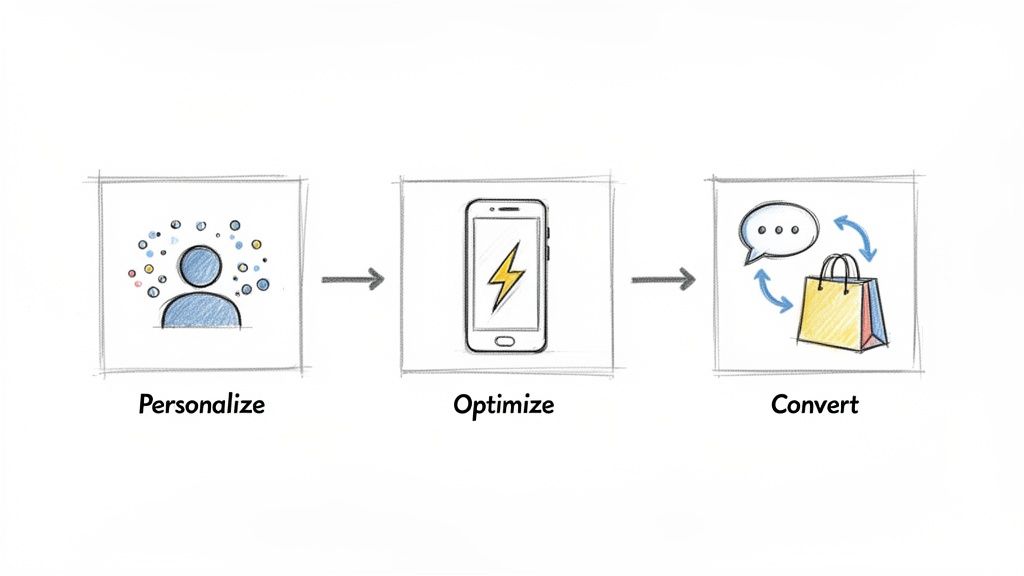
1. Personalize Every Interaction With Data
Generic, one-size-fits-all messaging is obsolete. Today's shoppers expect you to understand who they are and what they like. True personalization goes beyond using their first name in an email; it’s about delivering relevant experiences based on their behavior.
A Forrester/Bloomreach study revealed that just 14% of consumers felt their most recent online shopping experience was completely personalized. This gap between expectation and reality presents a massive opportunity.
Start by unifying your data. A customer who leaves a 5-star review is the same person in your VIP loyalty program. Your marketing should reflect this unified view.
Here are a few ways to put this into practice:
Segmented Email & SMS: Stop sending the same offer to everyone. Create segments based on purchase history, loyalty status, or review ratings. Send an exclusive offer to customers who left positive reviews or a re-engagement campaign to those who haven't purchased in 90 days.
AI-Powered Recommendations: Use a customer's browsing history to suggest products they'll genuinely love, turning your website into a personal shopping assistant.
On-Site Recognition: When a loyalty member logs in, acknowledge them. Display their points balance, greet them by name, and showcase exclusive perks available to them.
This level of personalization shows customers you value their business, which is the foundation of any strong relationship.
2. Optimize Your Mobile and Web Experience
Your website is your digital flagship store. If it’s slow, confusing, or broken on mobile, you’re losing sales—guaranteed. Nearly 80% of online shoppers admit to abandoning a purchase because of poor site navigation or unclear product information.
Optimization is not a one-time project; it's an ongoing commitment to removing friction.
Key Takeaway: The most important interactive element on your site is the search bar. Customers who use site search have high purchase intent. If your search can't understand context—like the difference between a "shirt dress" and a "dress shirt"—you are actively losing sales.
Focus on these three areas for maximum impact:
Mobile-First Design: Your site must be flawless on a smartphone. Buttons should be easy to tap, text should be readable without zooming, and images must load quickly.
Intelligent Search: Upgrade from basic keyword search to a system that understands user intent. It should handle typos, suggest relevant products, and allow for easy filtering.
Rich Product Information: Provide detailed descriptions, high-quality images from multiple angles, clear sizing charts, and accessible customer reviews to answer questions before they're asked.
3. Streamline Your Checkout to Stop Abandonment
The checkout process is the final hurdle where excitement can turn into frustration, leading to an abandoned cart. The goal here is absolute simplicity. Every extra field, click, or surprise fee increases the risk of them leaving.
A few non-negotiable best practices include:
Offer Guest Checkout: Forcing users to create an account is a notorious conversion killer.
Be Transparent with Costs: Display all shipping fees and taxes upfront to avoid last-minute surprises.
Provide Multiple Payment Options: Offer flexible payment methods like credit cards, PayPal, and "Buy Now, Pay Later" services.
Think of your checkout as an express lane. The faster and easier you make it, the more people will complete their purchase.
4. Turn Social Media DMs and Comments into a Revenue Channel
For most ecommerce brands, social media is the new storefront. It’s where customers discover products, ask pre-sale questions, and share their experiences. Yet many businesses still treat their DMs and comment sections like a low-priority support queue. This is a monumental mistake.
Every unanswered question in your comments is a lost sale. Every slow reply in your DMs sends a potential customer to a competitor. To win, you must treat these channels with the same urgency as live chat on your website.
This is where AI-driven automation becomes a game-changer. An intelligent system can:
Provide Instant Answers: Train AI on your product catalog to answer common questions like "Do you ship to Canada?" or "Is this available in blue?" 24/7.
Filter Out Noise: Automatically hide spam and troll comments so your team can focus on genuine customers.
Identify Hot Leads: Use sentiment analysis to tag comments like "I need this!" and surface them as high-priority sales opportunities.
By using automation, you can transform your social inbox from a chaotic mess into an efficient sales engine. Learn more about implementing these strategies with AI in social media management. This approach lets you meet customers where they are and provide the instant, helpful ecommerce customer experience they demand.
Measuring What Matters in Your Customer Experience Strategy
You can't improve what you don't measure. While it's easy to get distracted by vanity metrics like website traffic, a truly great ecommerce customer experience is built on understanding the numbers that reveal the health of your customer relationships.
This isn’t just about collecting data; it's about drawing a direct line from your actions to your business results. By focusing on a few powerful metrics, you can understand how customers feel about your brand and make smarter decisions that boost both loyalty and your bottom line.
Core Metrics That Define Customer Experience Success
You don't need a complex dashboard to get a clear picture of your CX performance. Start with these three essential metrics, each providing a vital piece of the puzzle.
Customer Satisfaction (CSAT): This is your in-the-moment snapshot. A quick survey asking customers to rate their happiness with a specific interaction (like a support chat) tells you if you're hitting the mark at critical touchpoints.
Net Promoter Score (NPS): This is your long-term loyalty gauge. It asks one simple question: "How likely are you to recommend our brand to a friend?" This metric identifies your biggest fans (Promoters) and detractors, showing your brand's overall health.
Customer Lifetime Value (CLV): CLV predicts the total revenue you can expect from a single customer over their entire relationship with you. Improving CX directly increases CLV because happy customers buy more, more often, and for a longer period.
Key Insight: These metrics are interconnected. A fantastic support interaction (high CSAT) can turn a frustrated customer into a loyal Promoter (improving NPS), which directly increases their lifetime value (CLV).
Connecting Your Actions to Real-World Outcomes
Tracking KPIs is step one. Step two is linking them to your operational efforts. For instance, how does reducing your social media response time impact customer satisfaction? This is where you connect your team's work to the company's financial health.
This connection is about understanding cause and effect. Faster, more helpful replies on social media reduce friction, making customers feel valued and directly improving their perception of your brand. You can learn to analyze these conversations with social media sentiment analysis tools.
The table below illustrates how specific CX initiatives impact the numbers that matter most.
Connecting CX Strategies to Key Performance Indicators
This table shows how specific customer experience initiatives directly impact measurable business outcomes and KPIs.
CX Strategy | Primary KPIs Impacted | Business Outcome |
|---|---|---|
AI-Powered Social Media Support | ⬇️ First Response Time | Higher satisfaction and reduced support overhead. |
Streamlined Checkout Process | ⬇️ Cart Abandonment Rate | Increased sales and a smoother purchase journey. |
Proactive Shipping Updates | ⬇️ "Where Is My Order?" Tickets | Fewer support tickets and greater customer trust. |
Loyalty Program with VIP Tiers | ⬆️ Repeat Purchase Rate | Stronger customer retention and higher long-term revenue. |
As you can see, every action has a clear, measurable reaction. When you focus on automating social media replies or sending proactive updates, you aren’t just creating a better experience—you’re directly moving the needle on the core metrics that drive sustainable growth.
Real Brands Nailing Their Ecommerce Customer Experience
Theory is useful, but seeing a world-class ecommerce customer experience in action is what makes the concept tangible. The best brands are obsessed with every customer touchpoint, understanding that a fast, helpful response in the comments can be more powerful than a massive ad campaign.
Let's break down what makes these brands CX masters. These examples focus on specific, repeatable tactics that turn casual shoppers into lifelong fans, offering practical takeaways for any business.
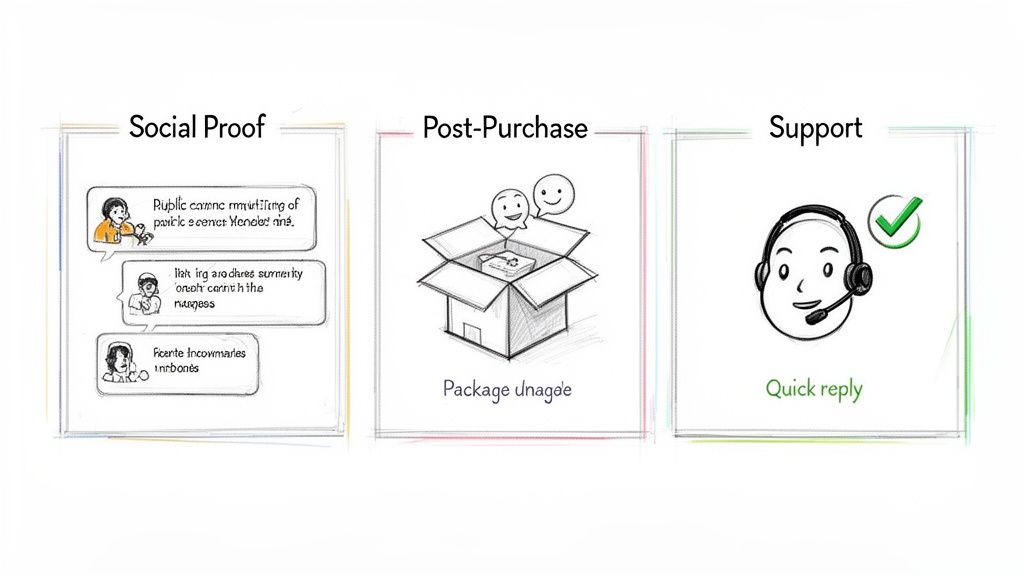
Chewy: Mastering Proactive, Empathetic Support
Online pet supply retailer Chewy is legendary for its post-purchase experience. While many companies see this stage as a simple logistics checklist, Chewy transforms it into a powerful relationship-building opportunity. They go far beyond sending shipping notifications, using every interaction to show they genuinely care.
Their strategy is built on a few core principles:
Surprise and Delight: Chewy is famous for sending hand-written holiday cards and even surprise pet portraits to customers. This unexpected, personal touch creates an unforgettable emotional connection.
Empathetic Problem Solving: If a customer needs to return pet food because a pet has passed away, Chewy often issues a full refund and suggests donating the food to a local shelter, turning a difficult moment into a gesture of goodwill.
The Takeaway: The post-purchase phase isn't just about logistics; it’s your best opportunity to create an emotional bond. Proactive, empathetic gestures show you care about the person behind the order, building unshakable loyalty.
Glossier: Turning Comments Into a Thriving Community
Beauty brand Glossier built its empire by making its social media channels feel like a group chat with friends. They excel at managing their comments section, treating it not as a support queue, but as a vibrant community hub.
When a potential customer asks about a foundation shade, Glossier's team—or often, other loyal fans—jumps in with helpful advice. This creates a trusted space where new shoppers feel confident making a purchase because they see real people validating the products in real time.
This approach achieves two things simultaneously:
It answers pre-sale questions publicly, helping not just the original commenter but countless others with the same question.
It fosters a genuine sense of community, making customers feel seen and heard, which strengthens their bond with the brand.
The Takeaway: Treat your comments section like your store's front door. Engage with every real question quickly and with personality. When other shoppers see you're actively involved, it builds massive trust and turns your comment threads into a powerful conversion tool.
Your Playbook for Building a Winning CX Strategy
Building an exceptional ecommerce customer experience is not a one-time project. It’s a continuous cycle of listening, adapting, and improving. This is your playbook for turning the concepts we've discussed into a concrete action plan.
Think of this as your launchpad for reframing CX—not as a cost center, but as your most reliable engine for growth. The goal is to move from theory to reality with a clear, step-by-step approach that delivers immediate results.
Step 1: Audit Your Current Customer Touchpoints
Before you can build something new, you need a blueprint of your existing experience. Start by mapping every single interaction a customer has with your brand—from the first ad they see to the post-purchase follow-up email.
Be brutally honest about where friction exists. For each touchpoint, ask:
Is it fast? How long does it really take to get a response in your Instagram DMs?
Is it easy? How many clicks does it take to buy a product? Can a customer find information without a frustrating search?
Is it personal? Does the interaction feel tailored to them, or is it a generic, one-size-fits-all message?
This audit will reveal your biggest opportunities. You might find your website is a breeze to use, but slow social media responses are eroding trust and costing you sales.
Key Insight: Don't just focus on your website. Your social media comments and DMs are a goldmine of CX data. The most common questions and complaints you receive there will point directly to what you need to fix first.
Step 2: Choose the Right Technology Stack
You cannot deliver a modern customer experience with outdated tools. The right tech stack automates repetitive tasks, provides crucial data, and frees up your team to focus on the human interactions that truly matter.
Your core stack should cover these key areas:
Social Media Management: A tool that unifies all your comments and DMs into one smart inbox is essential. Look for features like AI-powered replies, spam filtering, and sentiment analysis.
Customer Support Platform: A robust system for managing email and chat that integrates with your ecommerce store is a must.
Analytics and Feedback: You need tools to track KPIs like CSAT and NPS and to collect customer reviews.
The secret is integration. Your tools must communicate with each other to provide a single, unified view of each customer.
Step 3: Launch and Optimize Your Automations
With the right tools in place, you can begin building smart automations. For most ecommerce brands, the biggest initial win comes from mastering social media conversations. You can learn the details of effective social media inbox management to get a head start.
Kick things off with these high-impact automations:
Auto-Reply to Common Questions: Set up instant, on-brand answers for frequently asked questions like "Do you ship to my country?" or "How much does this cost?"
Filter Out the Noise: Automatically hide spam, profanity, and irrelevant comments so your team can focus on real customers.
Tag and Route High-Intent Leads: Create rules that identify comments like "I need this!" and automatically flag them as hot leads for your sales team.
This playbook is about starting where you can make the biggest impact today: your social conversations.
Frequently Asked Questions
What is the most important element of the ecommerce customer experience?
The single most important element is speed and convenience. Today's customers live on social media and expect immediate answers and solutions in the same channel where they initiated contact.
Forcing a customer to switch from an Instagram DM to an email creates friction. That friction can damage their perception of your brand more quickly than almost anything else.
How can a small ecommerce business improve its customer experience?
You don't need a huge budget. The key is to focus on high-impact areas first. For most small businesses, this means mastering social media engagement, as it's often the first point of contact for new customers.
Using an AI-powered tool to handle common questions, filter spam, and organize your DMs can be a game-changer. It gives your ecommerce customer experience a significant boost without the need for a large team.
Key Takeaway: You don't have to outspend your competitors to win on experience. You just have to be smarter. Meet customers where they are and be fast and helpful. For small teams, social media automation delivers the biggest return on investment.
What is the difference between customer service and customer experience?
While often used interchangeably, they are not the same. Think of customer service as a single component of the much larger customer experience.
Customer Service is reactive. It's how you respond when a customer reaches out with a specific problem or question.
Customer Experience (CX) is the entire journey. It’s the cumulative feeling a customer has about your brand, from the first ad they see to the unboxing of their order and the content they see in their feed months later.
This guide is packed with actionable strategies to Boost Your Ecommerce Customer Experience and move beyond basic service.
Stop wasting time on spam and start converting leads. Meet Alto AI centralizes your social DMs and comments into one smart inbox, using AI to provide instant, on-brand answers 24/7. Turn your social media into a sales engine today.