12 Best Social Media Automation Tools to Boost Engagement
Discover the top 12 social media automation tools to save time, boost engagement, and drive growth. See features, pros, cons, and pricing to pick the best one.

Alto AI
on
Feb 13, 2026

Imagine recovering 10+ hours a week and never missing a high-intent sales lead in your comments or DMs again. That's the power of the right social media automation tools. Manually handling every comment, direct message, and scheduled post is a direct path to burnout and missed revenue. The pressure for 24/7 engagement is immense, but the solution isn't to work harder; it's to automate smarter.
This guide cuts through the noise of countless platforms. We'll break down the top tools designed for distinct, critical functions: AI-powered inbox management, sophisticated content scheduling, deep analytics, and brand-safe comment moderation. Each option is analyzed with its ideal user in mind, from DTC brands scaling ad spend to agencies managing dozens of client accounts. Before diving in, understanding what it truly means to automate your social media posts is the first step towards reclaiming your time and focusing on high-impact strategy instead of manual tasks.
We provide a comprehensive look at each tool, complete with screenshots, direct links, and an honest assessment of its strengths and weaknesses. This isn't just a list; it's a strategic resource to help you select the exact software to scale your engagement, protect your brand reputation, and turn social conversations into conversions. Whether you need an all-in-one scheduler like Hootsuite or a specialized AI agent like Alto AI to handle sales and support in your DMs, you'll find the clear, practical analysis you need to make the right choice right here. Let's find the perfect fit for your workflow.
1. Meet Alto AI
Meet Alto AI is a powerful, AI-driven agent designed specifically for social selling and inbox management on Facebook and Instagram. It stands out among social media automation tools by centralizing both ad and organic comments and DMs into a single, intelligent inbox. This platform doesn't just collect messages; it actively engages with them 24/7, using customizable AI personalities to generate on-brand replies that convert conversations into sales.
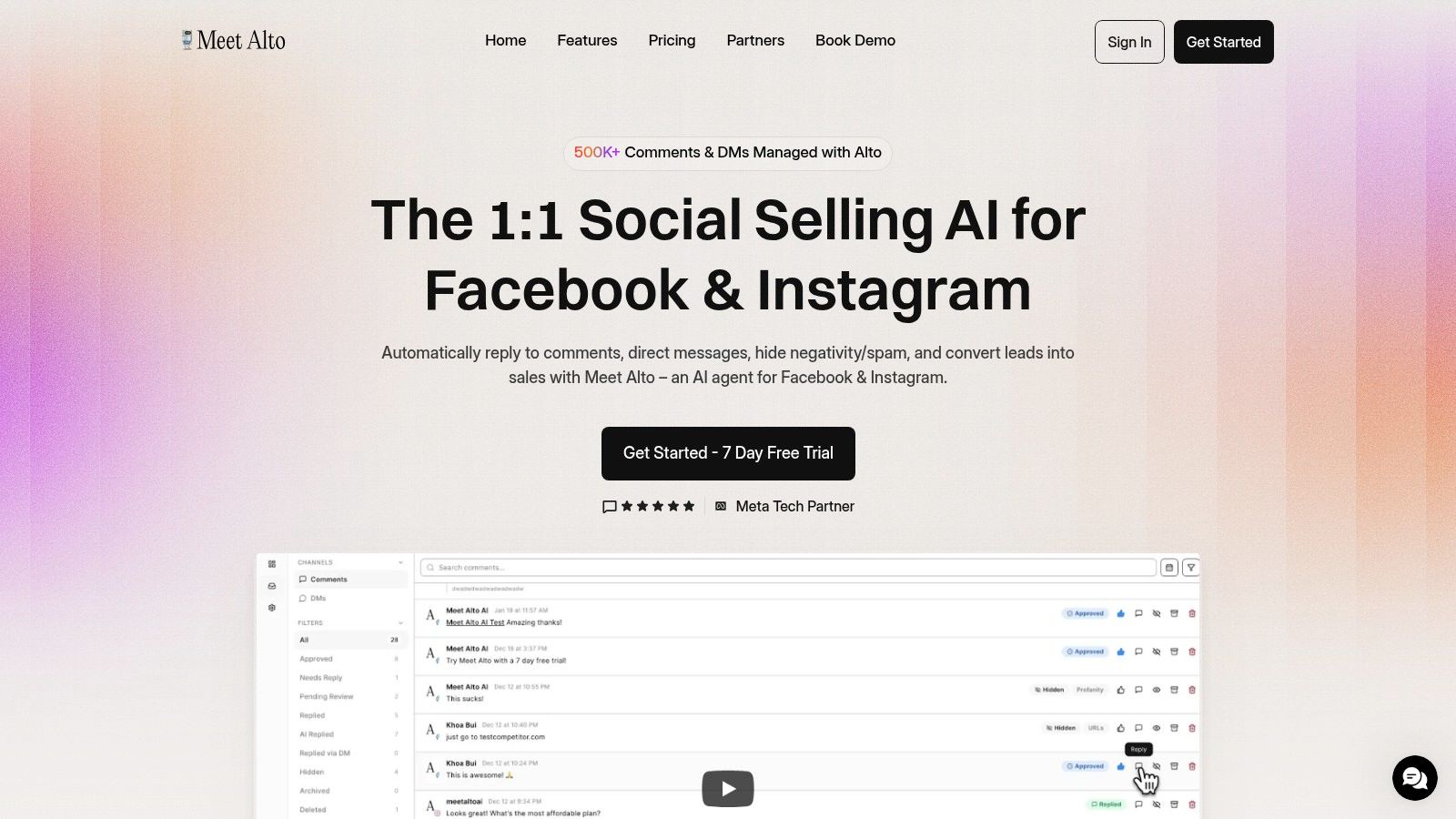
For e-commerce brands and agencies managing high-volume paid social campaigns, Alto is a game-changer. Its automated moderation instantly hides spam, profanity, and trolls, protecting ad spend and brand reputation without manual oversight. The platform also uses intent labels and sentiment tagging to surface high-value leads, allowing your team to prioritize outreach effectively. To learn more about how artificial intelligence is shaping this space, check out this guide on using AI for social media management.
Key Features and Pricing
Alto’s value is backed by a robust feature set and clear, scalable pricing. It is a Meta Tech Partner, ensuring reliable and approved API access. The platform boasts unlimited Facebook and Instagram pages and unlimited user seats on all plans, a significant benefit for growing teams and agencies.
Best For: E-commerce brands, media buyers, and agencies focused on converting social engagement into revenue on Meta platforms.
Pros: The unified inbox, 24/7 AI replies with brand-specific voice, and automated brand protection are standout advantages. Built-in analytics provide clear performance tracking.
Cons: While powerful, the AI requires initial setup and training to perfect its tone.
Pricing: Plans are month-to-month with a 7-day free trial. Starter is $49/month, Pro is $99/month, and Elite is $269/month, with a 20% discount for annual billing.
Website: https://meetalto.ai
2. Hootsuite
Hootsuite is one of the most established and comprehensive social media automation tools available, positioning itself as an all-in-one command center for larger teams and enterprises. It moves beyond simple scheduling to offer a full suite of features for planning, engagement, robust analytics, and social listening across all major networks. The platform excels at centralizing complex social media operations under one roof.
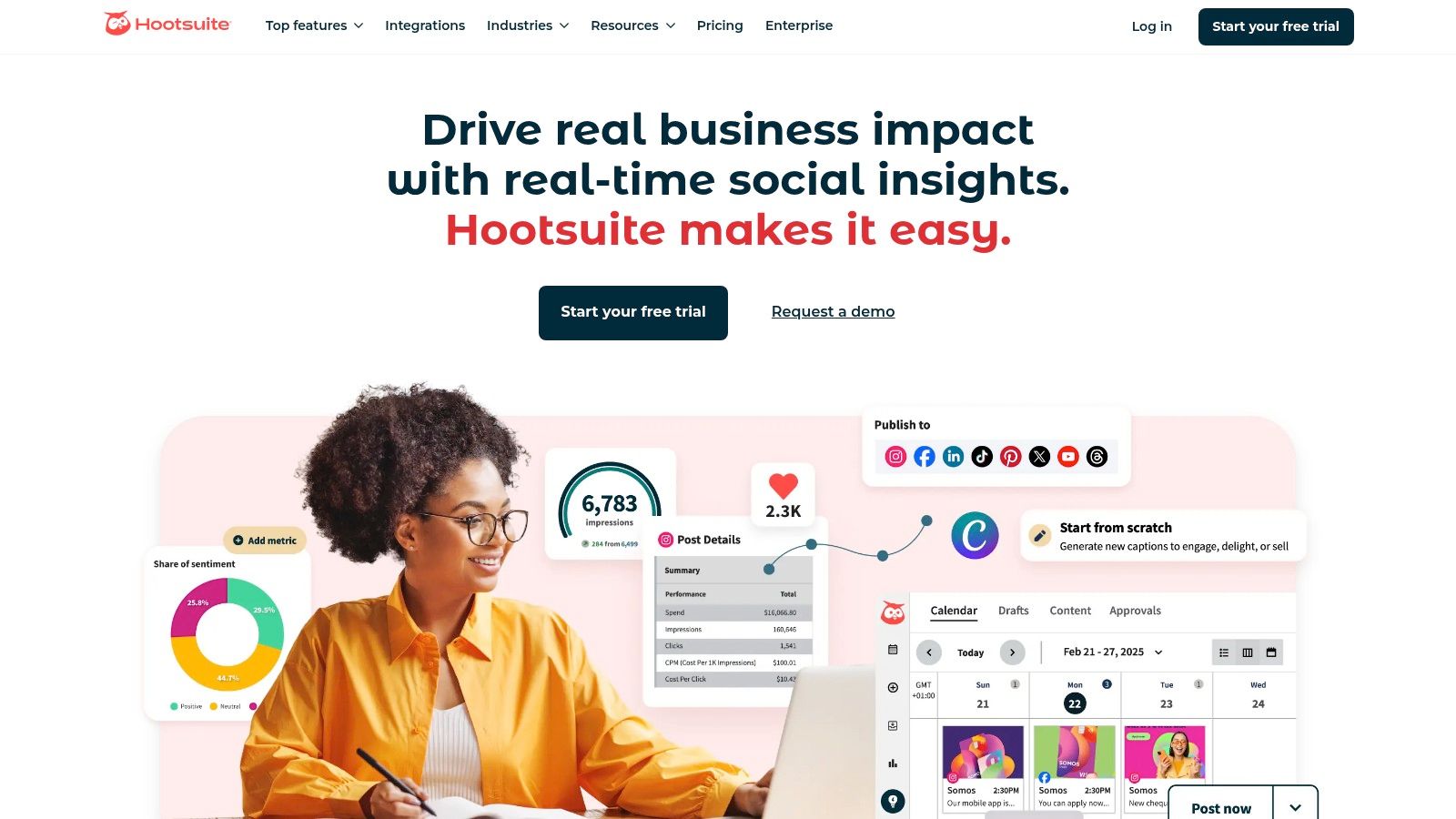
Its core strength lies in enterprise-grade governance and collaborative workflows. For organizations that require strict approval processes, role-based permissions, and detailed team assignments, Hootsuite provides the necessary infrastructure. The unified inbox automates comment and DM management by allowing you to set up rules that assign conversations to specific team members or flag messages containing certain keywords. This is invaluable for support teams and agencies who need a clear system for managing high volumes of engagement. For those looking to streamline their content strategy, the platform's AI assistant, OwlyWriter AI, helps generate captions, post ideas, and even suggests the optimal times to publish for maximum reach.
Key Features & Considerations
Best For: Enterprise-level businesses, large agencies, and regulated industries needing advanced team workflows and security.
Pros: Robust governance features, a massive app directory for integrations, and excellent educational resources through Hootsuite Academy.
Cons: The per-user pricing model can become expensive for large teams, and its most powerful features like advanced analytics and social listening are often locked behind higher-tier plans.
Website: https://www.hootsuite.com
3. Sprout Social
Sprout Social is a premium, all-in-one social media management platform renowned for its powerful analytics, sophisticated listening capabilities, and intuitive team-based workflows. It caters to established brands and agencies that require deep, actionable data to drive strategy. By combining publishing, engagement, and reporting into a single elegant interface, Sprout Social positions itself as a central hub for social media ROI, making it one of the most comprehensive social media automation tools for data-driven teams.
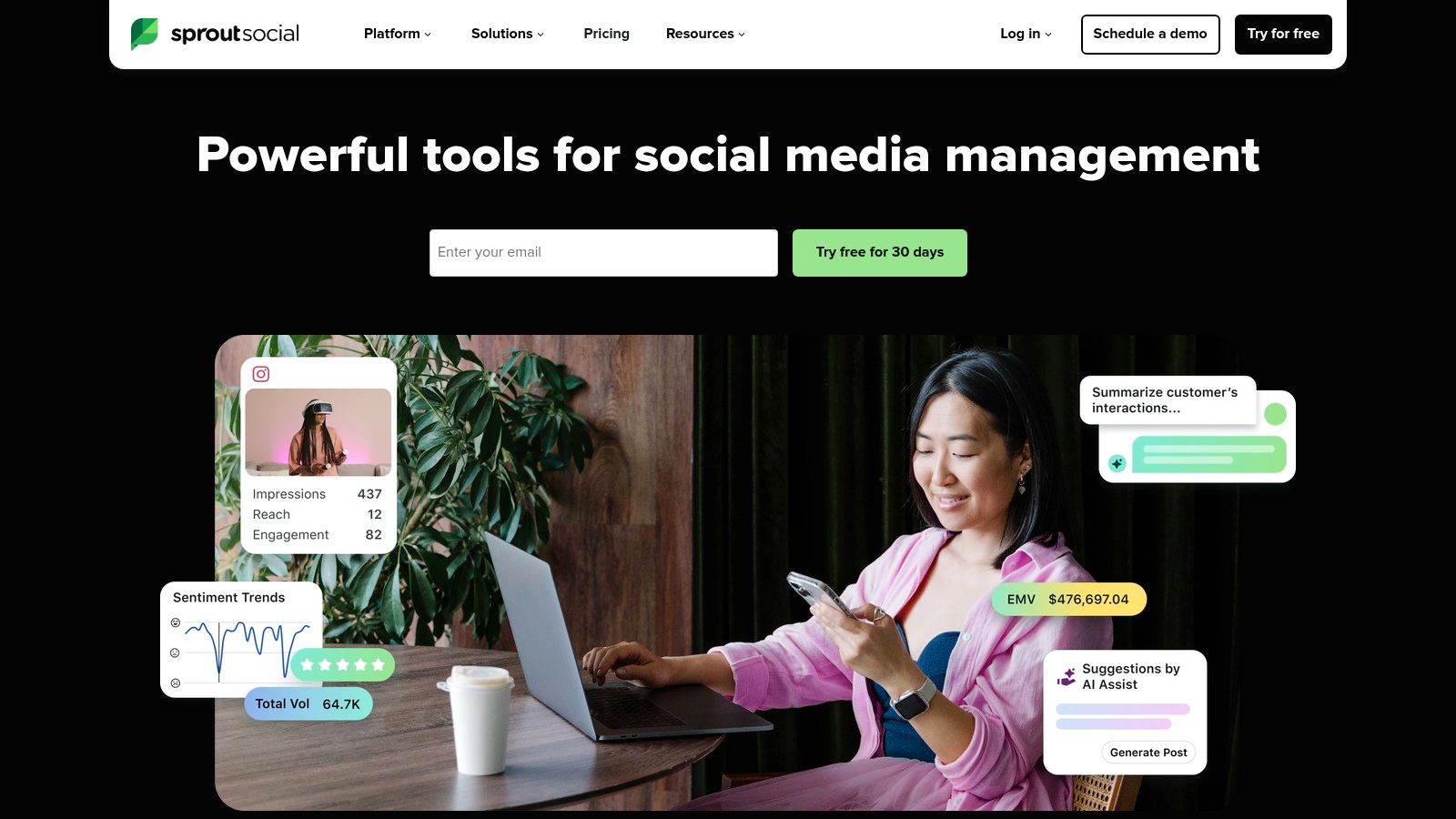
The platform’s core strength lies in its Unified Smart Inbox and robust reporting suite. The inbox uses AI to help manage high-volume engagement by tagging messages, identifying sentiment, and enabling rule-based automations for efficient routing to the right team members. For marketers needing to prove value, Sprout’s analytics provide detailed competitive reports and paid performance insights that connect social activity to business outcomes. Its advanced features extend to in-depth social listening, which helps brands track conversations and identify trends. If you want to learn more about this, you can explore the fundamentals of social media listening and its strategic benefits. This focus on data makes it a top choice for organizations prioritizing analytics and team collaboration.
Key Features & Considerations
Best For: Mid-market to enterprise-level brands and agencies that need best-in-class analytics, reporting, and cross-functional team approval workflows.
Pros: Consistently strong analytics and reporting depth, scales well for multi-department collaboration, and is a recognized leader in industry reports.
Cons: The per-seat pricing model can be a significant investment for smaller teams, and some advanced capabilities like premium listening are sold as add-ons.
Website: https://sproutsocial.com
4. Buffer
Buffer is a streamlined and user-friendly social media automation tool that has long been a favorite for small businesses, creators, and marketers who value simplicity and efficiency. Its strength lies in its intuitive design and straightforward, queue-based scheduling system, making it incredibly easy to get started without a steep learning curve. The platform provides a clean, clutter-free interface for planning, scheduling, and analyzing content across major social networks.
The platform is built around a core "set it and forget it" content queue, which automates publishing at pre-determined time slots. This is perfect for teams that want to maintain a consistent posting cadence with minimal daily effort. Buffer’s AI Assistant aids in generating post ideas, rewriting copy, and repurposing content, helping to overcome creative blocks. For engagement, its unified inbox centralizes comments and messages, while features like first-comment scheduling for platforms like Instagram allow users to automatically post a follow-up comment with links or hashtags. Its transparent, modular pricing and generous free plan make it one of the most accessible social media automation tools for those just starting out.
Key Features & Considerations
Best For: Small businesses, individual creators, and marketing teams looking for a simple, reliable, and affordable scheduling solution.
Pros: Extremely intuitive and easy to use, transparent and modular pricing by channel, and a useful free tier for testing workflows.
Cons: Fewer deep enterprise controls and advanced social listening features compared to competitors, and advanced reporting is limited to higher-tier plans.
Website: https://buffer.com
5. Later
Later is a visual-first social media management platform designed for brands, creators, and marketers who prioritize aesthetics, particularly on Instagram and TikTok. It stands out by centering its entire workflow around a visual content calendar, allowing users to drag and drop media to plan their feed's look and feel with precision. This makes it one of the top social media automation tools for e-commerce brands and influencers whose strategy relies heavily on visual storytelling and a curated online presence.
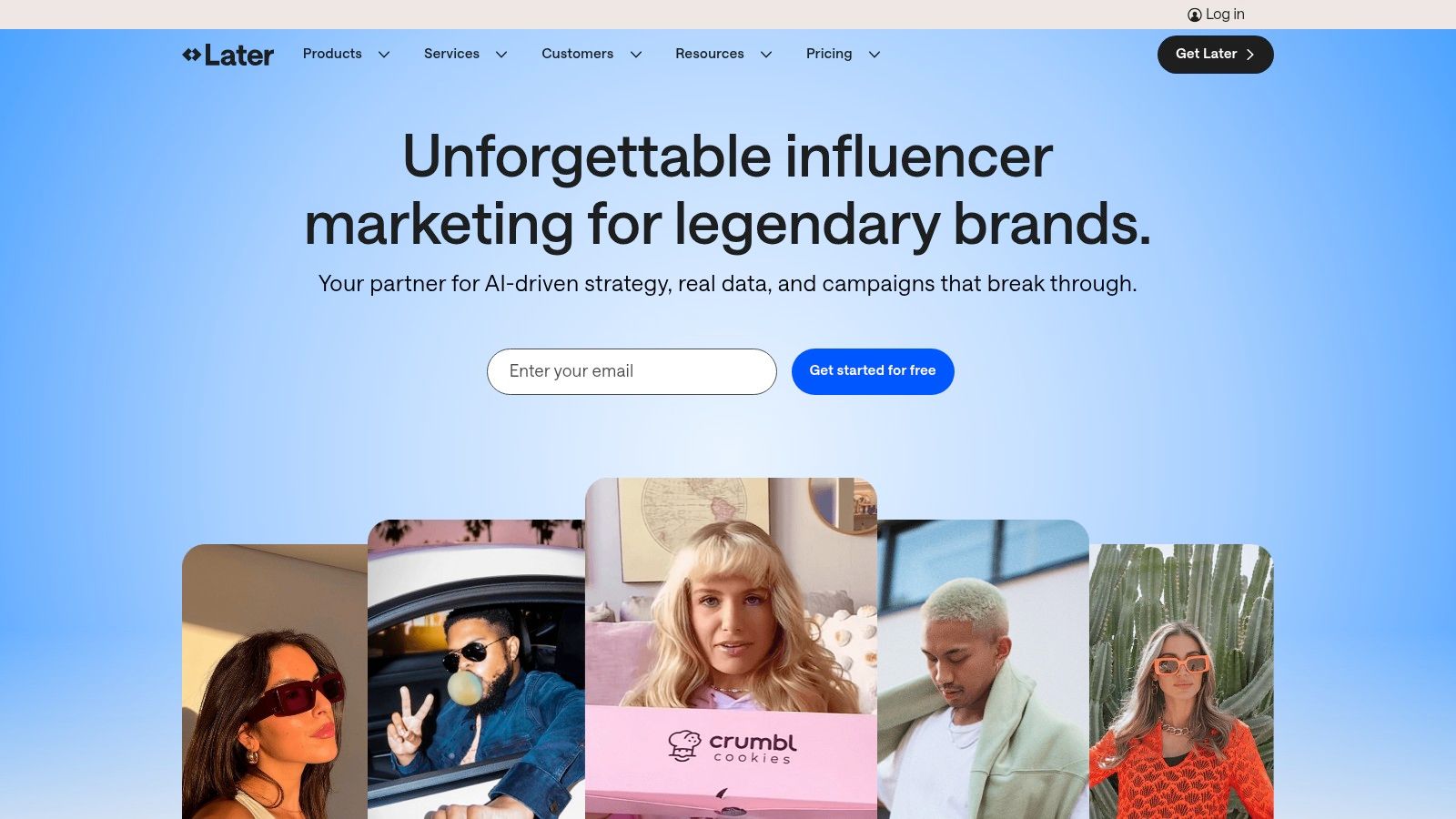
The platform excels at simplifying creator-focused workflows. Features like its Link-in-bio tool and Instagram product tagging are seamlessly integrated, helping drive traffic and sales directly from visual content. For content creation, Later's AI Caption Writer assists in generating engaging copy, overcoming creative blocks, and optimizing posts for different platforms. While its core strength is scheduling, higher-tier plans automate engagement by providing a Social Inbox to manage Instagram and Facebook comments and DMs in one place. Collaboration tools on Growth plans and above allow teams to share assets and streamline approval processes, making it a scalable solution for growing visual brands.
Key Features & Considerations
Best For: E-commerce brands, creators, and businesses that lead with a strong visual strategy on Instagram, TikTok, and Pinterest.
Pros: Excellent for visual planning and creator workflows, a simple and clear plan structure, and useful brand collaboration tooling for Instagram.
Cons: The starter plan has stricter limits with fewer add-ons, while deep analytics and robust collaboration features require higher-tier plans.
Website: https://later.com
6. Agorapulse
Agorapulse is a full-stack social management tool that shines with its powerful unified inbox, comprehensive ad comment moderation, and agency-focused features. It’s designed as a complete solution for teams that prioritize engagement and need to efficiently manage high volumes of audience interactions. The platform excels at organizing conversations and maintaining a clean, professional online presence, particularly for brands running paid campaigns on social media. Its clear, per-user pricing model offers a straightforward alternative to more complex tiered structures.
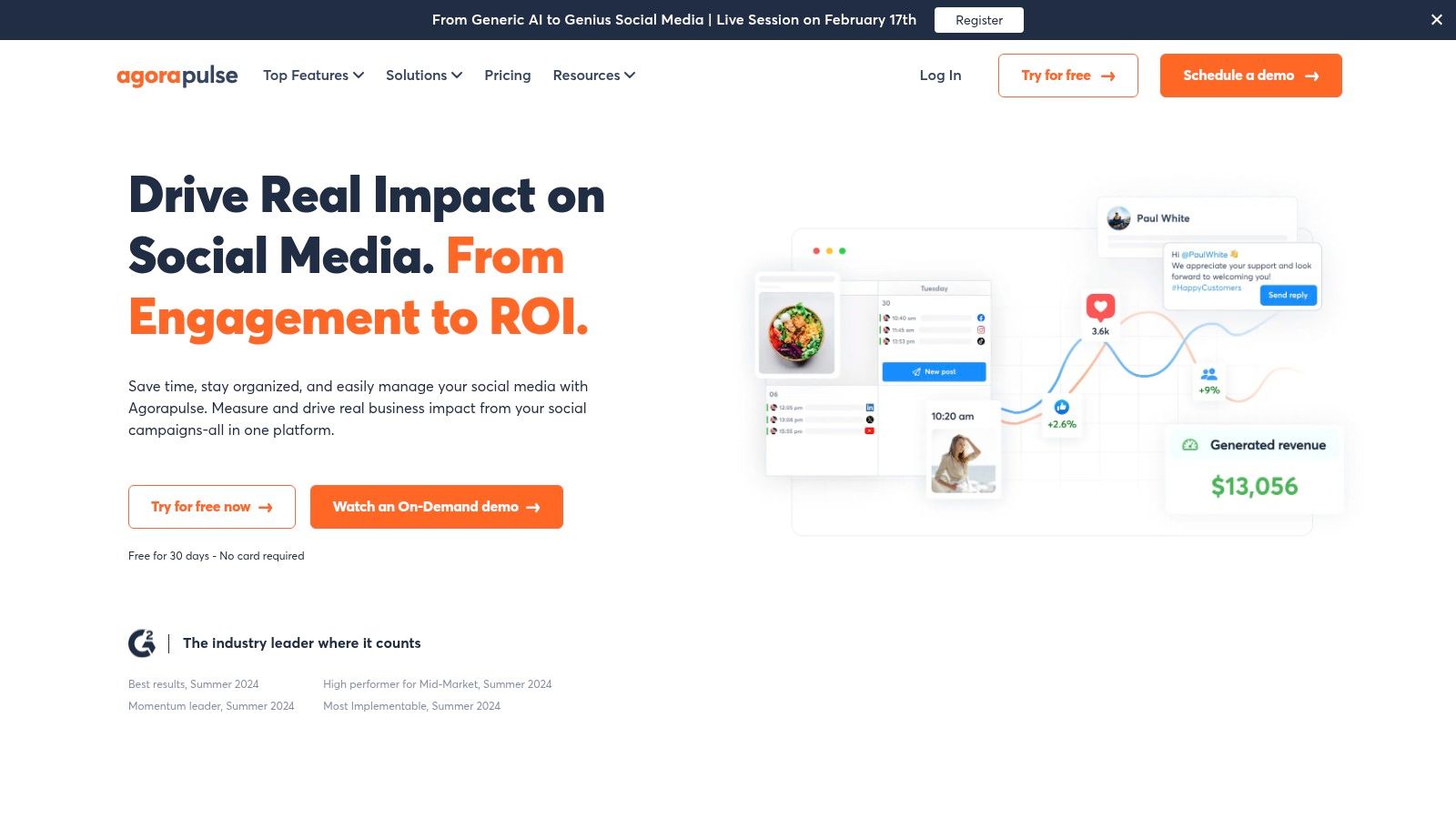
The platform’s strength is its robust inbox handling, which automates comment and DM management with sophisticated rules. You can automatically hide, delete, or flag comments based on keywords, assign conversations to specific team members, and even translate messages on the fly. This makes it one of the most effective social media automation tools for support teams and agencies managing ad comments across Meta, TikTok, and LinkedIn. For content creation, features like a shared calendar, content queues, and an integrated Canva editor streamline the publishing process, while unlimited scheduling provides excellent value.
Key Features & Considerations
Best For: Digital agencies, customer support teams, and businesses heavily invested in social media advertising that need strong moderation and reporting.
Pros: Clear per-user pricing model with unlimited posts, superior ad comment moderation capabilities, and solid reporting with white-label options for agencies.
Cons: The cost scales directly with each additional user, and adding extra profiles requires purchasing add-ons, which can increase the overall price.
Website: https://www.agorapulse.com
7. Loomly
Loomly carves out its niche as a brand success platform focused heavily on collaborative workflows, content planning, and transparent approval processes. It’s less of an enterprise-level command center and more of a streamlined hub for marketing teams and agencies that prioritize content quality and brand consistency. The platform is built around a powerful and intuitive content calendar, making it one of the best social media automation tools for teams that need to visualize, draft, and approve content in a structured environment.
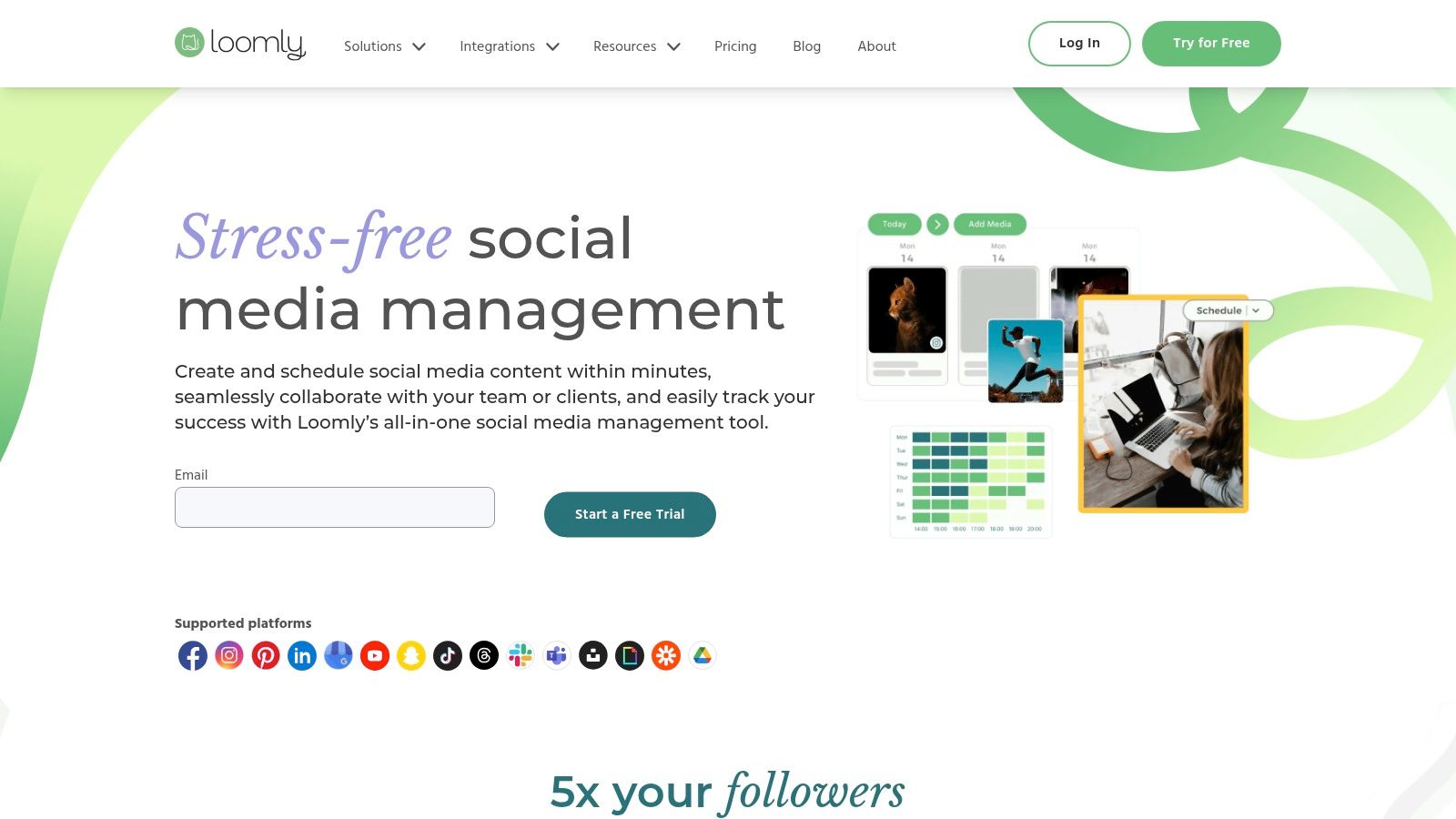
Its core strength lies in its clean user interface and robust, yet straightforward, approval system. For teams managing multiple brands or clients, Loomly offers custom workflows where posts can move through different states like "Draft," "Pending Approval," and "Scheduled," ensuring every piece of content gets the right sign-off. This is invaluable for maintaining brand voice and preventing errors. The platform also provides post ideas, a hashtag manager, and a library for brand assets, centralizing everything needed for content creation. While it may lack the deep social listening of larger suites, its focus on creation and collaboration makes it a powerful ally for content-centric teams.
Key Features & Considerations
Best For: Marketing teams, digital agencies, and brand managers who need strong approval workflows and a collaborative content calendar.
Pros: Strong approvals and collaboration UI, flexible account and user scaling, and simple billing with monthly or annual discounts.
Cons: Pricing details can vary by configuration, it has fewer listening features compared with enterprise suites, and some advanced enterprise needs require a custom quote.
Website: https://www.loomly.com
8. SocialPilot
SocialPilot positions itself as one of the most cost-effective and powerful social media automation tools, specifically designed for small to medium-sized businesses (SMBs) and digital marketing agencies. It offers a clean, intuitive interface that packs a robust suite of scheduling, analytics, and collaboration features without the enterprise-level price tag. The platform stands out by providing generous account limits and user seats, making it incredibly scalable for growing teams.
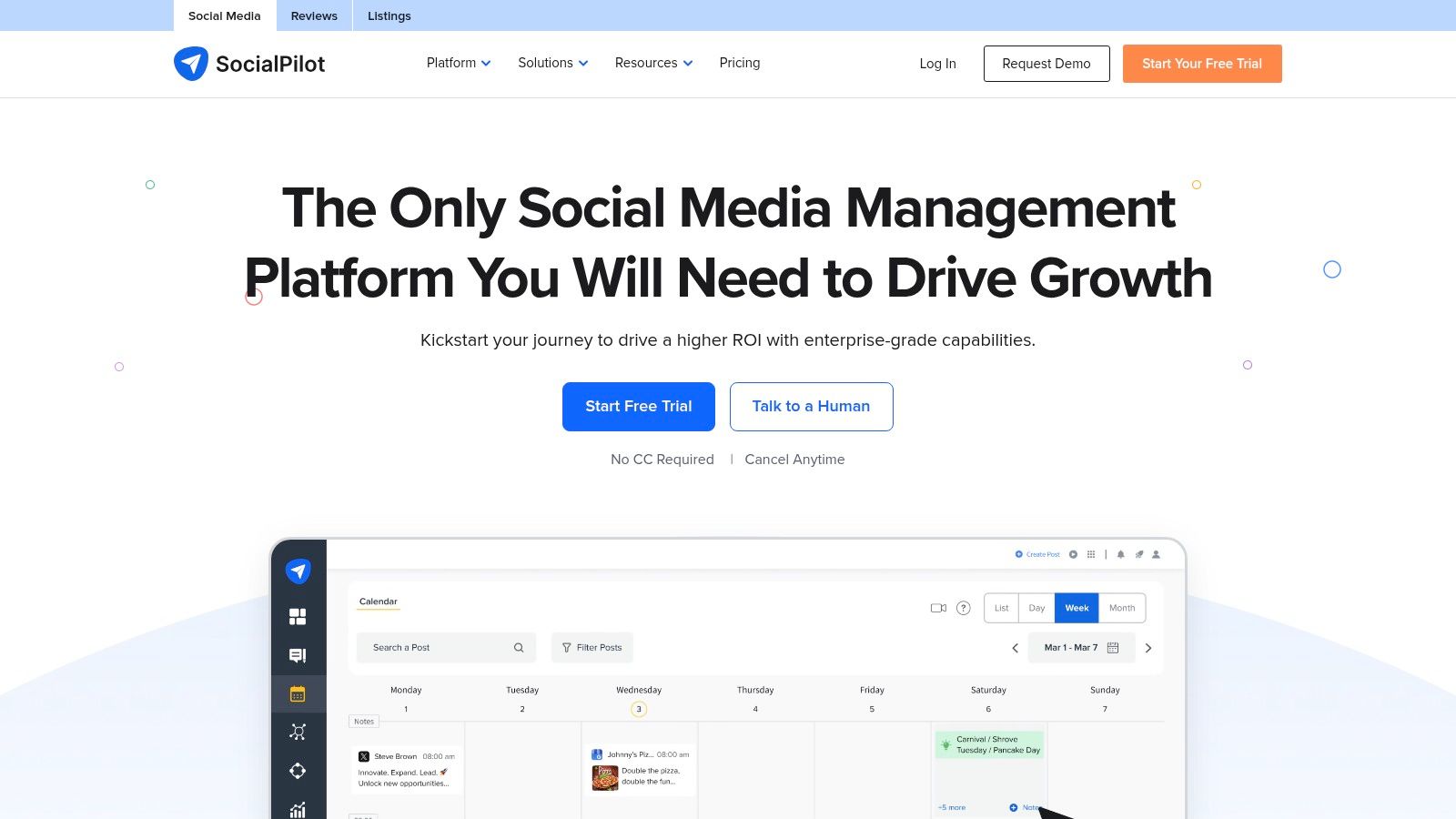
The core value of SocialPilot lies in its agency-focused and team-centric functionalities. Features like bulk scheduling, a unified social inbox for managing engagement, and client management tools with approval workflows streamline agency operations significantly. For agencies needing to deliver performance insights, the white-label reporting feature is a major advantage, allowing them to present professional, branded analytics to clients. The inclusion of AI credits in paid tiers for content creation further enhances its value proposition, helping teams overcome creative blocks and maintain a consistent content flow across multiple accounts.
Key Features & Considerations
Best For: Marketing agencies, SMBs, and teams managing a high volume of social media accounts on a budget.
Pros: Strong price-to-capability value, generous account and user limits on higher tiers, and a no-card-required 14-day free trial.
Cons: Advanced analytics and deeper social listening capabilities are less comprehensive than enterprise-level suites and are often reserved for higher-priced plans.
Website: https://www.socialpilot.co
9. Zoho Social
Zoho Social is a powerful, well-rounded platform designed for small-to-midsize businesses and agencies that need more than just scheduling. It shines brightest for organizations already invested in the Zoho ecosystem, offering seamless native integrations with Zoho CRM and Zoho Desk. This unique connection transforms social media from a simple marketing channel into a fully integrated part of the customer lifecycle, linking social interactions directly to sales and support tickets. The platform provides a comprehensive suite of tools covering publishing, monitoring, and analytics at a very competitive price point.
The platform’s strength is its ability to centralize a wide array of social media management tasks without the enterprise-level price tag. Its SmartQ feature automates post timing by suggesting the optimal slots when your audience is most active, while its flexible approval workflows help teams maintain brand consistency. For agencies managing multiple brands, the Agency and Agency Plus plans offer dedicated dashboards and custom-branded reports. Zoho Social also stands out for its broad channel support, including newer networks like Threads, Mastodon, and Bluesky, making it a forward-thinking choice among social media automation tools.
Key Features & Considerations
Best For: SMBs, agencies, and businesses that use or plan to use other Zoho products like Zoho CRM or Desk.
Pros: Exceptional value for money, deep integration with the wider Zoho software suite, and extensive network support including emerging platforms.
Cons: The most valuable features and multi-brand support are reserved for higher-tier plans, and pricing can appear inconsistent as it varies by region.
Website: https://www.zoho.com/social
10. Sprinklr Social
Sprinklr Social is an enterprise-grade, AI-native customer experience platform designed for the complexities of global business. It unifies social media management across more than 30 channels, integrating publishing, engagement, listening, governance, and customer service into a single architecture. Sprinklr is built for large, multi-brand organizations that require strict compliance, deep governance controls, and a unified view of the customer journey, making it a powerful command center for complex operations.
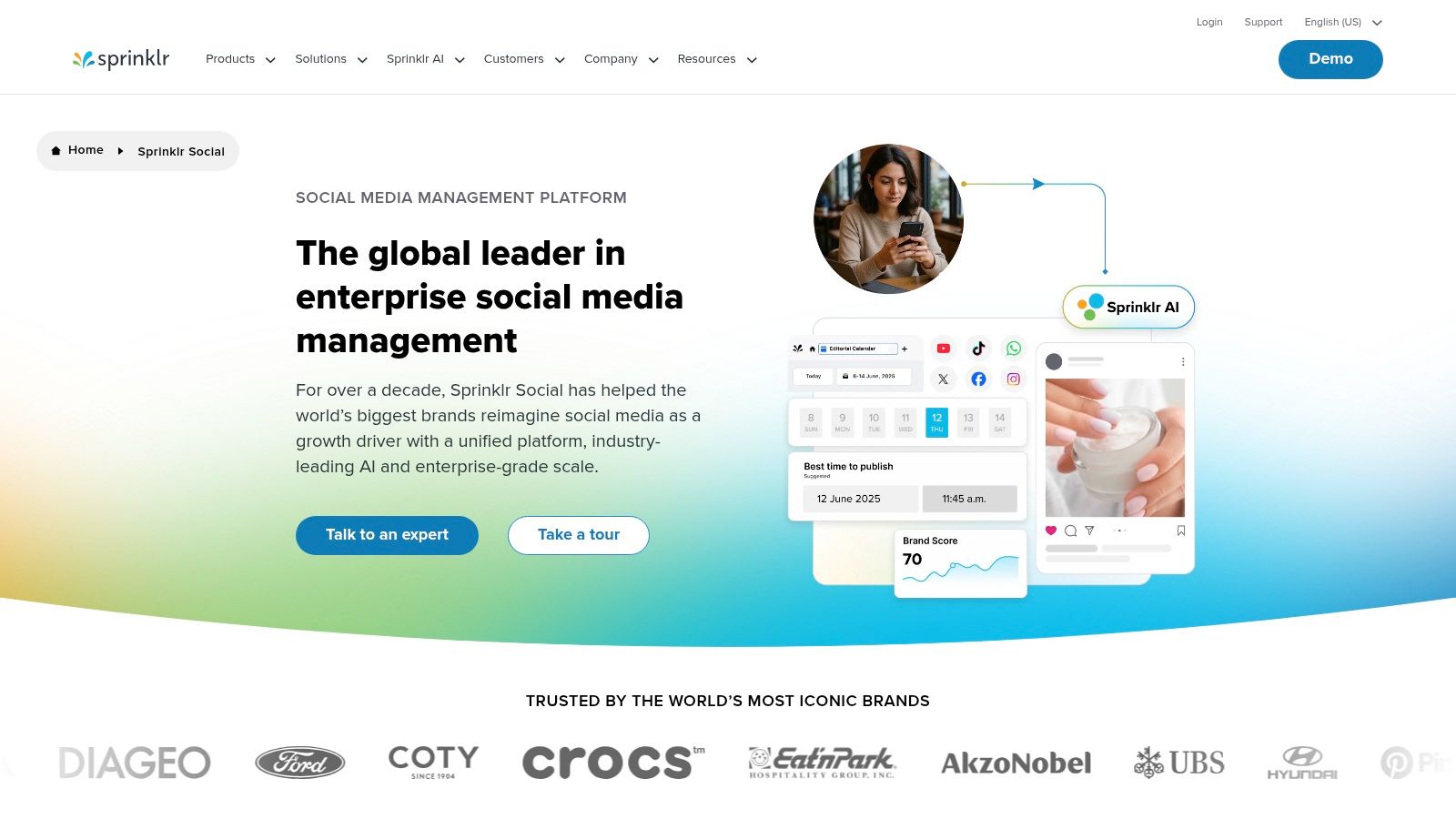
The platform’s core strength is its ability to manage social media at scale with sophisticated, role-based workflows and AI-driven automations. Its AI engine optimizes content, automates engagement routing, and derives actionable insights from competitive benchmarking and visual data. This is crucial for brands that need to maintain a consistent voice and handle high volumes of interactions across different regions and teams. For companies focused on a holistic approach, Sprinklr's deep integration capabilities with CRM, DAM, and BI stacks ensure that social data informs wider business strategy, including comprehensive social media reputation management.
Key Features & Considerations
Best For: Large enterprises, multi-brand corporations, and global teams in regulated industries that need a unified, compliant, and scalable platform.
Pros: Purpose-built for complex, multi-region teams with deep channel coverage, robust compliance and governance controls, and strong industry recognition.
Cons: Pricing and complexity are tailored to mid-market and enterprise organizations, not SMBs. The platform typically requires a sales-led engagement, offering fewer self-serve options than other tools.
Website: https://www.sprinklr.com/products/social-media-management
11. HubSpot (Marketing Hub with Social tools)
HubSpot offers its social media tools not as a standalone product but as an integrated component of its comprehensive Marketing Hub. This positions it as one of the best social media automation tools for businesses that want to tie social media performance directly to CRM data, lead generation, and overall marketing campaign ROI. Instead of treating social media as an isolated channel, HubSpot centralizes it within a broader ecosystem of email marketing, landing pages, and customer relationship management, providing a unified view of the customer journey.
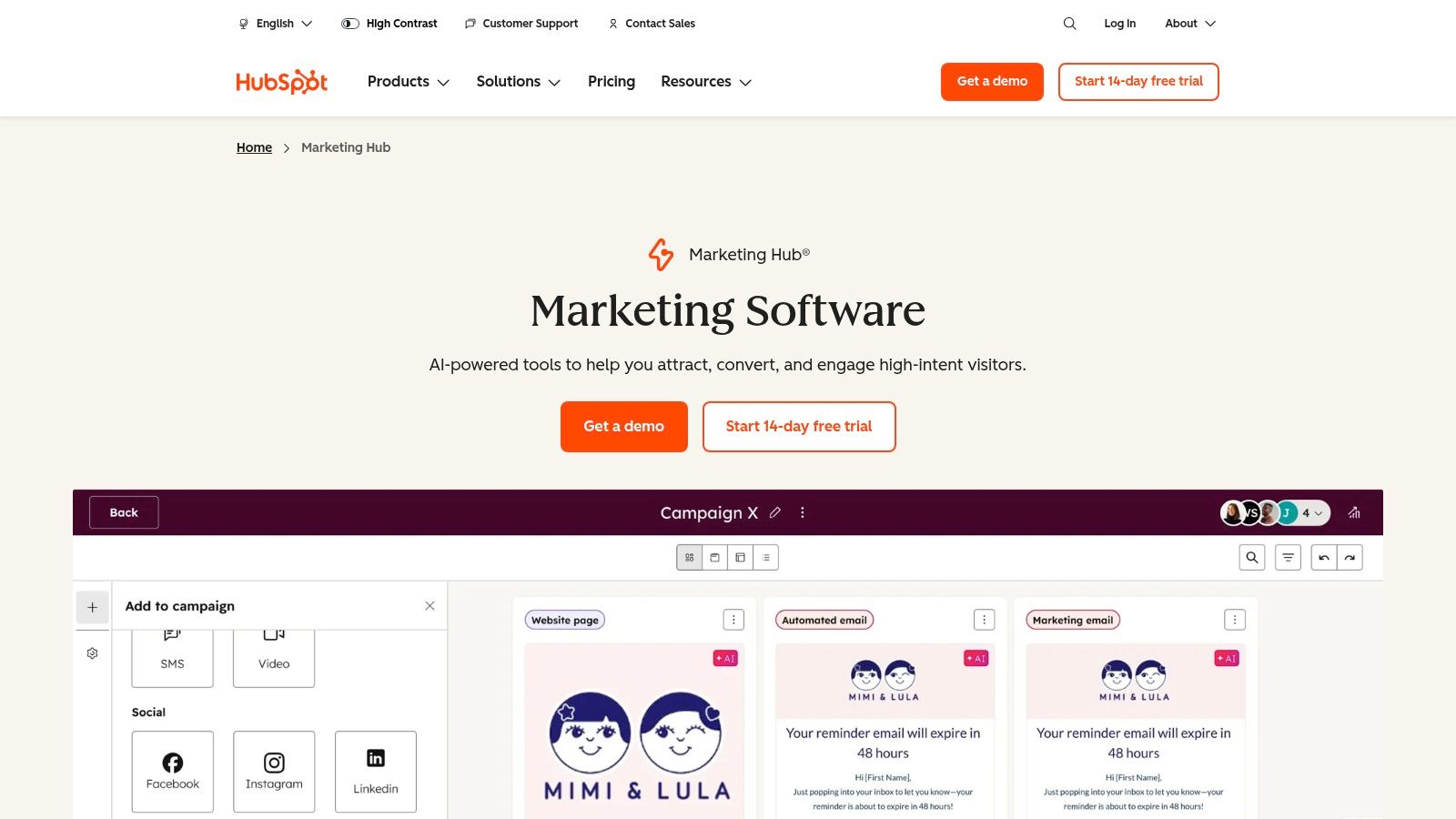
The platform’s core strength is its native integration with the HubSpot CRM. When a known contact engages with a social post, that interaction is automatically logged on their contact record, giving sales and marketing teams a complete activity history. You can schedule and publish content across all major networks, monitor keywords, and track engagement, but the real power comes from attributing social media activity to actual business outcomes like new leads and customers. This makes it an ideal solution for B2B marketers and companies looking to prove the value of their social efforts with hard data, using it alongside other social media lead generation tools to build a powerful pipeline.
Key Features & Considerations
Best For: B2B companies, marketing teams already using the HubSpot ecosystem, and businesses focused on marketing attribution and ROI.
Pros: Unmatched native connection between social, CRM, and email automation, consolidated reporting for true multi-touch measurement, and the ability to scale into a full RevOps platform.
Cons: The social tools are only available starting at the Professional tier, which requires a significant budget and onboarding commitment. It is not ideal for those seeking a simple, low-cost scheduler.
12. G2 (Social Media Management category)
While not a social media automation tool itself, G2’s Social Media Management category is an indispensable resource for researching, comparing, and shortlisting platforms before making a purchase. It functions as a massive B2B software marketplace where you can leverage verified user reviews and data-driven reports to find the perfect tool for your specific business size and needs. Instead of relying on vendor marketing, G2 provides a transparent view of how real users rate different solutions on features, ease of use, and support.
The platform’s core strength is its powerful filtering and comparison engine. You can use its live category grids to see how tools stack up against each other in real-time, filtering by business segment (SMB, Mid-Market, Enterprise), user satisfaction ratings, and specific features. This allows you to quickly narrow down dozens of options to a handful of top contenders that meet your exact criteria. For teams needing enterprise-grade features like advanced governance or security, G2’s quadrant-style reports, like the Momentum Grid, offer a quick visual summary of market leaders and emerging challengers, helping you make a more informed and confident buying decision.
Key Features & Considerations
Best For: Marketing teams, agencies, and IT departments conducting due diligence before investing in new social media software.
Pros: Up-to-date, reviewer-driven insights and rankings, useful for side-by-side feature comparisons, and enterprise-specific views for assessing scale.
Cons: It's a review aggregator, not a direct seller, so you still purchase from the vendor. Rankings shift seasonally, so it's best to verify details directly.
Top 12 Social Media Automation Tools — Comparison
Product | Core features | UX / Quality metrics | Target audience | Pricing & value |
|---|---|---|---|---|
Meet Alto AI (Recommended) | Central smart inbox (comments + DMs, ads+organic), AI reply automation with brand personalities, auto-moderation, intent & sentiment tagging, analytics, bulk actions | Meta API approved; 500K+ interactions managed; 24/7 replies; claims ~94% faster replies, higher ROI | e‑commerce/DTC, social managers, agencies, media buyers, small teams scaling paid social | Starter $49/mo (5k AI credits), Pro $99, Elite $269; 7‑day trial; unlimited FB/IG pages & seats; white‑glove & priority support |
Hootsuite | Scheduling & unified calendar, centralized inbox, DM automations, listening & analytics, app integrations | Enterprise governance & workflows; robust integrations; mature platform | Enterprises, large teams, agencies needing governance | Per‑user pricing; higher tiers required for advanced listening/analytics |
Sprout Social | Publishing & optimal times, Smart Inbox with sentiment/tagging, competitive & paid social reports, AI-assisted replies (Advanced) | Deep reporting & analytics; strong listening; scales for approvals | Brands and agencies needing advanced reporting & approvals | Per‑seat pricing; advanced features/add-ons raise cost |
Buffer | Queue-based scheduling, first‑comment support, AI assistant, community inbox, free tier | Fast onboarding; simple UX; transparent modular pricing | Small teams, creators, freelancers | Free plan (up to 3 channels); paid tiers per channels/features; budget-friendly |
Later | Visual planner, IG/TikTok workflows, link‑in‑bio, product tagging, Social Inbox (Growth+) | Excellent visual planning for creators; commerce-friendly IG tools | Creators, visual brands, small e‑comm | Simple plan tiers; AI credits included; higher tiers for unlimited scheduling |
Agorapulse | Publishing/calendar, unified inbox with rules & translations, ad comment moderation, team workflows | Strong ad comment moderation & agency reporting; reliable inbox handling | Agencies, teams managing ad comments & client reporting | Per‑user pricing; additional profiles/users are add‑ons |
Loomly | Collaborative content calendar, roles & approvals, hashtag manager, analytics, custom workflows | Strong approvals & collaboration UI; easy scaling | Teams needing approval flows, brand governance | Simple monthly/annual billing; pricing varies by config |
SocialPilot | Multi‑account scheduling, Social Inbox, approvals, AI credits, white‑label reports | High price-to-capability value; generous account limits on higher tiers | SMBs and agencies seeking affordable multi-account management | Cost-effective tiers; top tier offers unlimited users & white‑label |
Zoho Social | Multi-network support (incl. Threads/TikTok/YouTube), SmartQ scheduling, CRM integrations, agency plans | Strong value within Zoho ecosystem; flexible tiers | SMBs to agencies wanting CRM tie‑ins | Free → Premium tiers; regional pricing varies; higher tiers for multi-brand |
Sprinklr Social | Global governance, role-based workflows, advanced automations, AI for optimization, broad integrations | Enterprise-grade compliance & governance; deep channel coverage | Large enterprises, multi‑brand & multi‑region orgs | Enterprise‑priced; sales‑led quoting |
HubSpot (Marketing Hub) | Social scheduling & publishing, AI captioning, social engagement tied to CRM, multi-channel attribution | Consolidated reporting tied to CRM; strong campaign attribution | Teams needing CRM‑connected social and full marketing stack | Social features start at Professional tier; higher budget & onboarding |
G2 (Category) | Live vendor grids, filters by ratings/features, direct trial/vendor links | Reviewer-driven insights; up-to-date rankings | Buyers researching/comparing social tools | Free to use; not a vendor—purchase from selected providers |
Choose the Right Automation for Your Goals
Navigating the landscape of social media automation tools can feel overwhelming. We've explored a wide range of solutions, from comprehensive all-in-one platforms like Sprout Social and Hootsuite to focused content schedulers like Buffer and Later. Each tool serves a distinct purpose, designed to solve a specific set of challenges for marketers, agencies, and founders. The central lesson is clear: the "best" tool isn't the one with the most features, but the one that aligns perfectly with your most critical business objective.
Your journey to finding the right automation partner begins with a clear diagnosis of your primary bottleneck. Are you struggling to maintain a consistent posting cadence across multiple platforms? A dedicated scheduler is your answer. Do you need deep, board-ready analytics to justify social media spend? An enterprise-grade platform will deliver the insights you need. But for many e-commerce brands, DTC marketers, and agencies running paid campaigns, the biggest opportunity for growth and the most significant time sink lies elsewhere.
From Engagement Metrics to Revenue Generation
The real challenge is often found in the chaotic, high-volume environment of your comments and DMs. This is where purchase intent is expressed, customer service issues arise, and brand reputation is built or broken in real-time. While traditional social media automation tools excel at publishing content, they often treat community management as a manual, secondary task. This is the critical gap where specialized AI solutions provide transformative value.
Instead of just scheduling posts, these modern tools focus on converting the engagement your content and ads generate into tangible business outcomes. They address core revenue-driven problems:
Lead Capture: How do you reliably capture leads from every interested commenter on your ads without manual outreach?
Sales Conversion: How do you guide users from a "how much?" comment to a completed checkout, 24/7?
Brand Protection: How do you instantly hide harmful spam, scams, and competitor links that poison your ad comments and deter real customers?
Support Efficiency: How can you provide instant, accurate answers to frequently asked questions in DMs, freeing up your team for complex issues?
This is a fundamental shift from automation for the sake of efficiency to automation for the sake of growth. The goal is no longer just to "manage" social media but to turn it into a predictable, scalable sales and support channel.
Making Your Final Decision
As you evaluate the options, move beyond feature lists and ask strategic questions. Don't just ask "Can it schedule posts?" Ask "How can this tool help me turn my ad spend into more customers?" If your biggest pain point is a flooded inbox and comments section filled with missed sales opportunities and toxic spam, an all-in-one platform is a blunt instrument for a precision job. You need a specialist.
The right automation tool acts as a force multiplier for your team, handling the repetitive, time-sensitive tasks that are crucial for conversion but impossible to manage manually at scale. By automating the front-line interactions in your comments and DMs, you empower your team to focus on strategy, creative, and high-touch customer relationships, ultimately driving better results and a healthier bottom line.
Ready to stop manually replying to every comment and start converting them into customers? Meet Alto AI is the specialized automation agent built for e-commerce brands and advertisers who need to capture leads, drive sales, and protect their brand 24/7. See how our AI can transform your comments section into your most effective sales channel.